Beyond High School is our free monthly newsletter covering higher education policy and practices in Colorado. Sign up to get it delivered to your inbox early.
When Joana Baldermann learned state lawmakers might phase out the statewide Teacher Recruitment Education and Preparation program, the news prompted a scramble.
Baldermann and her daughter Cailyn Baldermann were banking on the TREP program, as it is known, to pay Cailyn’s tuition at Metropolitan State University of Denver next year. Now, the Baldermanns need to figure out new financial aid options after lawmakers placed the program for aspiring educators on the chopping block because of a massive budget shortfall.
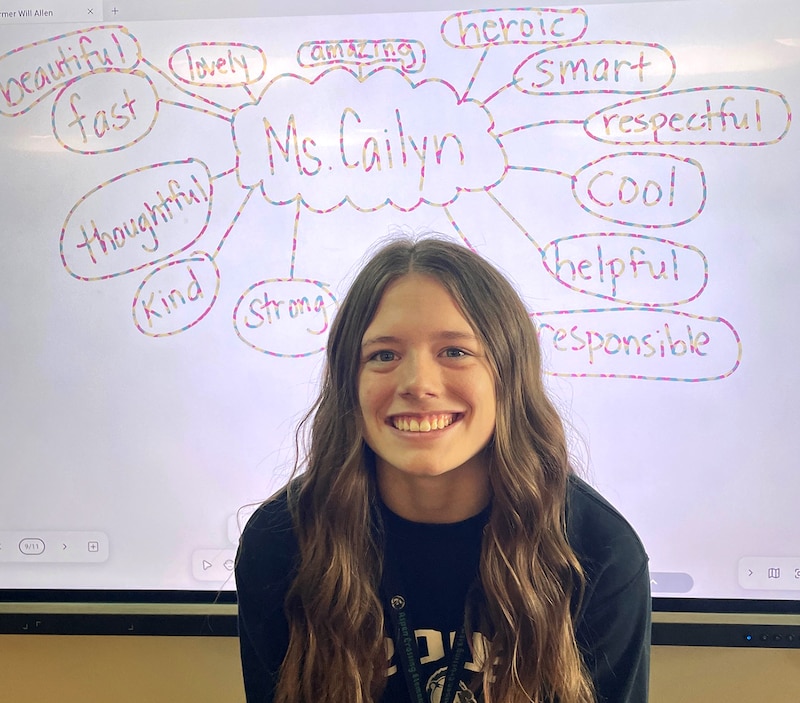
“Since my freshman year, I have been planning extensively around the TREP program as a foundational step toward my future as an elementary teacher,” Cailyn, an Eaglecrest High School senior, wrote in a letter to lawmakers on the state’s House Appropriations Committee. “Much of my college planning was built around the understanding that TREP would provide a strong pathway to pursuing my education.”
Lawmakers on the state’s Joint Budget Committee have tried to preserve core K-12 funding, but described the potential end of TREP as part of the painful cuts needed to address a budget shortfall that could be as high as $1.5 billion.
The proposal has left some families in a similar situation as the Baldermanns, having to consider new ways to pay for college near the end of the school year when some scholarship deadlines have already passed.
Lawmakers created TREP in 2021 to help grow the teaching workforce. The initiative, capped at 250 participants statewide, allows students to stay enrolled in high school after graduation for up to two years while their school district pays for them to take college classes. Eligible students must have completed one year of specialized education coursework in high school to be considered for the program.
TREP participants also aren’t eligible for college financial aid or most scholarships, since they’re still considered high school students.
State lawmakers have filed House Bill 1357 to eliminate the TREP program. Doing so would save the state about $1.6 million next year, according to a legislative analysis. The 220 students currently enrolled in TREP would be allowed to finish out their education through the program. The following year, the state would save about $3 million.
The bill also reduces how much the state pays to districts for a student’s college education per year from $10,721 to $7,104.
State Rep. Emily Sirota, chair of the powerful Joint Budget Committee and a Denver Democrat, said on Tuesday during a House Appropriations Committee hearing that the cut relieves pressure on the state’s education savings, leaving more money available to fund core services.
Some school districts want to figure out how to continue a similar program if TREP ends.
CTE Director Madison Tortessi with Cañon City High School said she wishes lawmakers would let a last round of seniors enroll in TREP, because some of her students don’t know what to do next. The district has sought permission from the state to prop up a P-TECH elementary education pathway, but it will be too late for this year’s seniors.
About 22 schools participate in P-TECH across the state. The program allows schools to partner with businesses and colleges to prepare Colorado students for jobs.
“We’re really hoping that we get approved for this,” Tortessi said. “And then we don’t have to tell kids, ‘No, you can’t do TREP.’ We can say, ‘You can do this instead.’”
Parent Stephanie Christian said the statewide change leaves many high school seniors like her daughter without an option. Christian has led the charge to advocate for the program, and her daughter Abby plans to attend the University of Northern Colorado in the fall.
House and Senate lawmakers will spend the next week debating the recently introduced budget proposal and its companion bills, including the one to eliminate TREP. Some lawmakers might file amendments that would alter the proposal.
Christian hopes lawmakers will allow high school seniors who want to use the program a chance to do so.
“None of those kids have any money to go to college now without this,” she said. “You have hundreds of kids that are six weeks away from graduating.”
Jason Gonzales is a reporter covering higher education and the Colorado legislature. Chalkbeat Colorado partners with Open Campus on higher education coverage. Contact Jason at jgonzales@chalkbeat.org.