Did you know search engines like Google are changing the way you see news? Keep Chalkbeat’s valuable education coverage at the top of your feeds by clicking here and checking the box next to our name.
Colorado voters this week approved an overhaul of the state’s tax code that will boost funding for K-12 and early childhood education, as well as healthcare. Amendment 87 is expected to raise billions by hiking taxes on the state’s highest earners.
The Associated Press called the race on Friday morning.
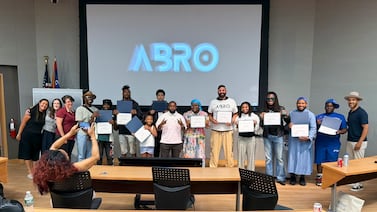
A coalition of advocacy groups claimed victory on Thursday ahead of the official result by celebrating on the amphitheater steps of Denver’s La Raza Park as Drake’s “Started from the Bottom” played over loudspeakers.
Chris deGruy Kennedy, president of the Bell Policy Center, said that the measure’s passage marks the most “significant change to Colorado’s fiscal policy in at least 20 years.”
“This is a signal by voters that we are fundamentally changing the direction of how we are going to make sure Colorado’s economy supports every home, every older adult, every child, and everyone in between,” he said.
Amendment 87’s new graduated income tax code will take effect in 2027 and should generate about $2 billion in additional state revenue in 2028. Under the amendment, none of that money will be refunded to taxpayers.
The state will now have six tax brackets and the majority of residents will see their tax bill reduced. The rates will range from 3.7% to 8.4%, and anyone making below $500,000 a year will pay 4.4% or less. Taxpayers making over $500,000 will pay more.
Although the money will be directed to fund education, healthcare, and early childhood programs, lawmakers will have a big say in how it gets distributed.
Currently, Colorado assesses all workers and businesses a 4.4% income tax. Coloradans rejected a competing ballot measure, Proposition 136, that would have kept the state’s flat tax rate unchanged.
If both measures had passed, it would have created a legal conundrum, which either the courts or the Legislature would have needed to resolve.
Jason Gonzales is a reporter covering higher education and the Colorado legislature. Chalkbeat Colorado partners with Open Campus on higher education coverage. Contact Jason at jgonzales@chalkbeat.org.