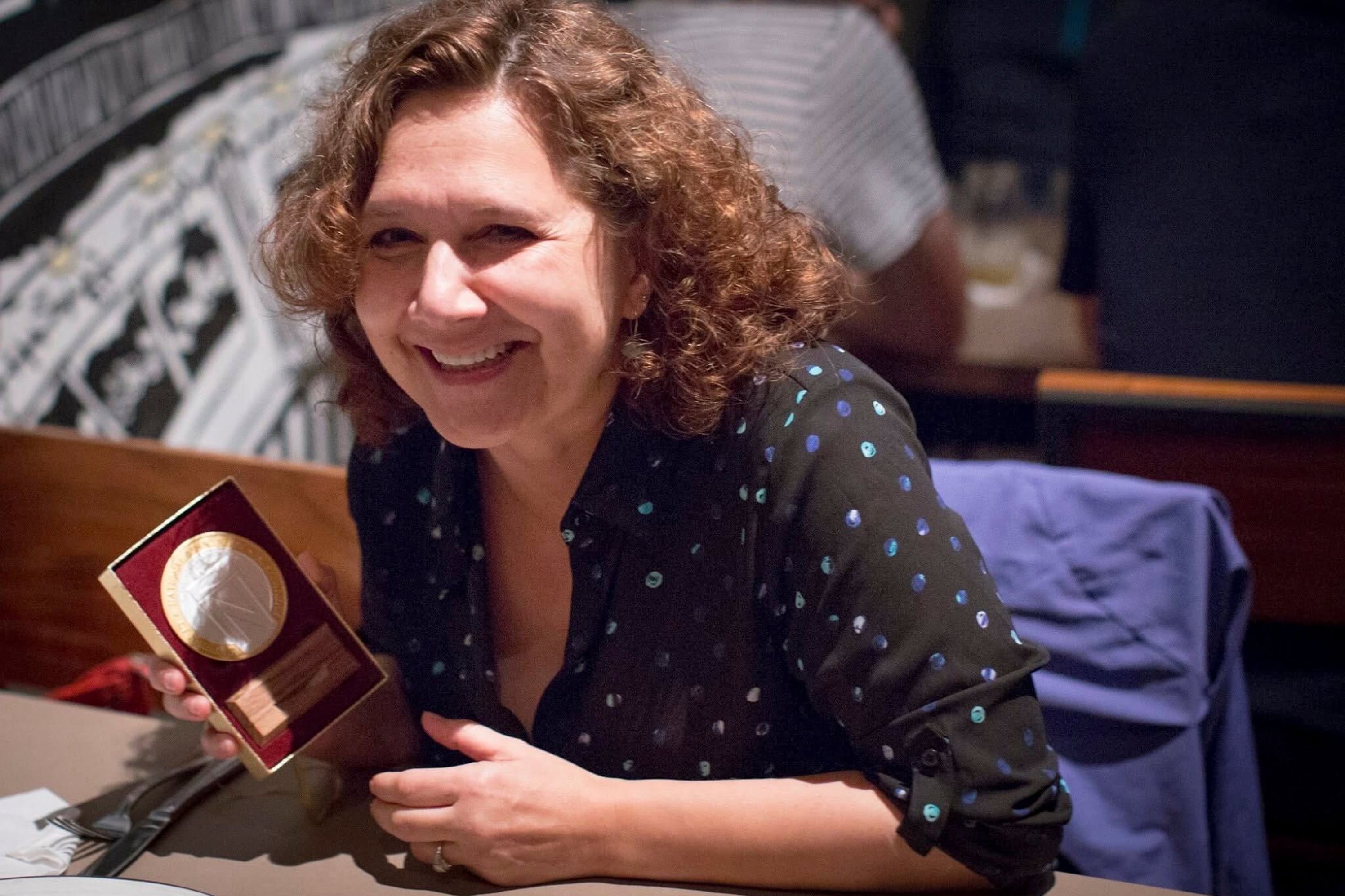
On a hot June day in 2010, a fresh-out-of-college Jason Gonzales worked up the nerve to approach the person seated alone at a desk in a hotel conference room in Denver.
This was the popup student newsroom at the annual convening of the National Association of Hispanic Journalists, where experienced pros mentor journalists of the future and students report on news of the conference — and Mónica Rhor was running the show.
As Gonzales soon found out, Rhor, then between reporting roles at The Associated Press and the Houston Chronicle, was not the least bit intimidating. Rather, she was soft-spoken, a careful listener, a bit stoic, mindful of her words, patient, and, above all, kind.
“I was a little scared of her, which is crazy to think about now,” said Gonzales, a Chalkbeat Colorado reporter who was thrilled when Rhor joined the Chalkbeat staff in 2021 as a story editor. “She would look around the room and say, ‘Look at the people next to you. They all look like you, and you are not going to find this in journalism, and it’s going to be lonely sometimes as a person of color. But you always have this family around you.’”
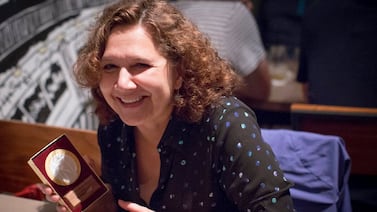
Chalkbeat lost a beloved colleague and friend when Elizabeth Mónica Rhor Samaniego died Nov. 1 after a relatively brief battle with an aggressive form of brain cancer. She left a legacy of stories she told and shaped, careers she nurtured, students she lifted up, and two daughters who have brighter futures because of her. She was 65.
“Mónica was a human representation of Chalkbeat’s values: working to make journalism better and caring for those around her,” said Sarah Darville, Chalkbeat’s editor in chief. “She really went above and beyond to support her colleagues around the country, making their stories as strong as possible while also making sure reporters felt supported.”
While Rhor’s role involved editing stories from all Chalkbeat markets, she was assigned primarily to bureaus in Newark and Chicago, and she was an integral member of those teams.
“Shortly after I started at Chalkbeat, Mónica told me ‘editing is about relationships,’” said Chicago bureau chief Becky Vevea. “I watched her bring this advice to life every single day. Mónica built relationships with reporters, writers, and colleagues word by word, story by story, interaction by interaction. She had an incredible gift for demanding excellence while honoring the writer’s voice. And somehow she added a bit of magic to every story she touched.”
A fighter and writer who focused on inequities
Rhor was born in Ecuador two months premature, “a fighter since day one,” said her younger sister Sylvia Rhor. The family emigrated to the U.S. in 1963 and settled in New Jersey, where parents Jorge and Inés María Rhor found jobs as factory workers.
In fifth grade, Mónica decided she wanted to be a writer. It was her life’s calling, Sylvia said.
After earning a bachelor’s degree in journalism from NYU in 1983, Rhor began her journalism career with a short stint with AP in Jackson, Mississippi, followed by stops at The El Campo Leader News in Texas, the Delaware State News, and the Fort Lauderdale Sun-Sentinel.
From there, she moved to the Philadelphia Inquirer, Miami Herald, Boston Globe, Orange County Register, AP again, USA Today, and the Houston Chronicle, more than once. The Houston area became home.
Shaped by her own experiences, Rhor devoted much of her reporting to telling the stories of marginalized communities and exposing social and systemic inequities.
She followed a Mexican American family in Massachusetts to illustrate the impact of the state’s decision to eliminate bilingual education. She wrote about efforts to keep kids from dropping out of school in Camden, New Jersey. She documented challenges facing the Houston school system, including the fear and disruption sown by the Trump administration’s immigration policies.
Maria Carillo, a former senior editor at the Houston Chronicle, called Rhor a gifted storyteller who wrote and edited with authority and passion.
“And she demanded representation as part of our mission,” Carillo said. “She knew she was speaking for others who weren’t seen or heard in the community and frankly, in the newsroom.”
In her last stint at the Chronicle, Rhor took on a new role as an editorial board member responsible for writing editorials and columns, and she produced an opinion podcast.
Rhor strove to mentor and elevate young reporters
Perhaps even more than her reporting, Rhor was known for her commitment to nurturing young journalists of color, especially Hispanic and Latino journalists.
Marissa Lang was a 20-year-old student journalist trying to find her way when she met Rhor through the mentorship program at an NAHJ conference in Puerto Rico.
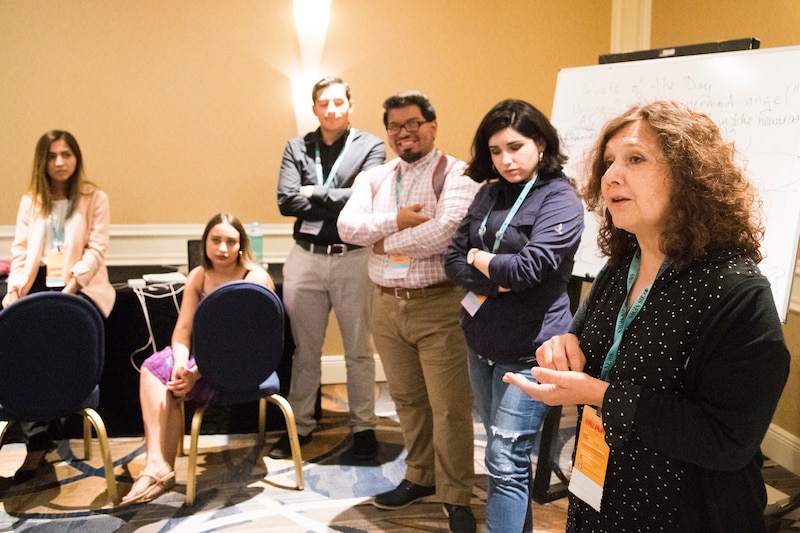
“Mónica was someone who really convinced me I could do this for real,” said Lang, who went on to work at several newspapers including The Washington Post and is now a national correspondent for National Public Radio. “When she told me I was good at this, I believed her.”
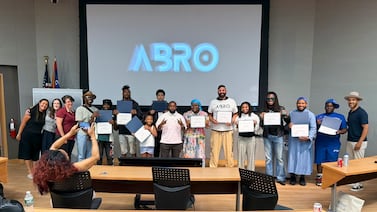
Beyond NAHJ, Rhor volunteered time to mentor student journalists through other support and membership organizations for journalists of color, including the National Association of Black Journalists, Unity Journalists, and Next Generation Radio Project.
“She had a real deep in her bones understanding that we have to lift each other up, and that this industry is not going to just spontaneously change itself because it should or is the right thing to do,” Lang said. “Those of us in positions of influence or any position of power have to help make that change and spur that change and insist on that change.”
That passion for helping young people and her experience covering schools inspired Rhor to teach. While balancing reporting, she taught high school journalism in suburban Houston, where she witnessed inequities play out daily, including Black students being punished disproportionately and curriculum that failed to acknowledge contributions of people of color.
In 2023, she earned an online education degree from the University of Missouri.
Reporters relied on Rhor for empathy, skilled editing
Rhor joined Chalkbeat in 2021 as a story editor, a role that paired her with reporters and bureau chiefs to turn raw copy into published stories. In an introductory essay for readers, she wrote about the pain of navigating pandemic online learning with her two then-sixth grade daughters, describing them as “bleary-eyed and bone-weary” from all the Zooms.
It was during the pandemic that Rhor began forging a bond with Chalkbeat Chicago senior reporter Mila Koumpilova, who was similarly juggling work and mothering young children.
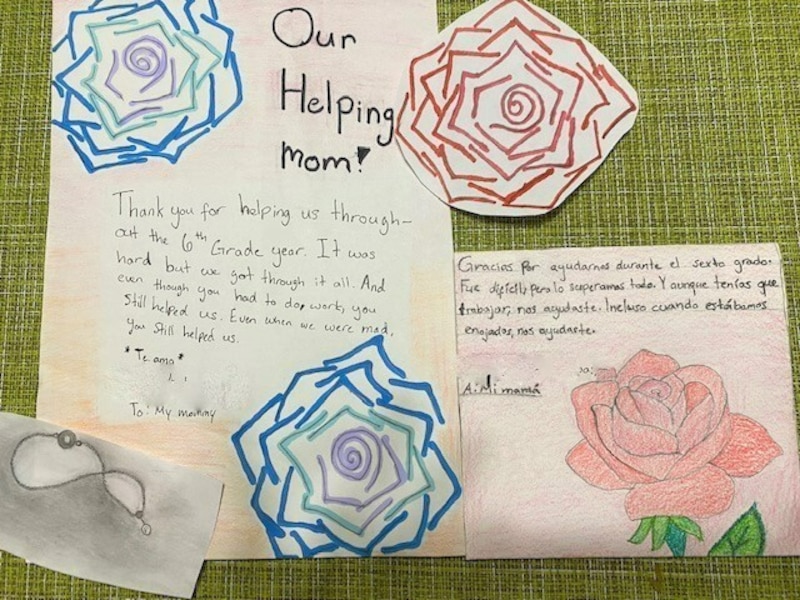
Rhor was the ideal partner to help steer Koumpilova’s reporting on how the pandemic widened learning gaps for boys of color. It bore similarities to Rhor’s 2019 USA Today investigative project that exposed discipline practices that harm Black girls.
“She was just a really caring and steadying presence for me,” Koumpilova said. “She cared about people, but she also cared a lot about the craft. She made every story measurably better for me.”
Rhor was dedicated to the craft of storytelling. She started a Chalkbeat Slack channel spotlighting great writing. She insisted on strong “nut grafs,” which tell readers a story’s central point and why they should care. She taught reporters to put as much effort into the end of stories as the beginnings, and she viewed closing stories with a quote as lazy and predictable.
She also would hold reporters’ hands when things weren’t going their way. Earlier this year, Chicago reporter Reema Amin spent weeks on a sensitive story about a student who was swept up in an immigration raid, only to see it fall apart because a main source feared for their safety.
“I went to her first to explain what happened — and, to be honest, to seek some comfort,” Amin said. “She provided just that. She gently told me that we couldn’t tell this story without this source, and she could really understand where they were coming from. But she also told me it was OK to be sad and just patiently listened as I vented. She listened, digested, and offered sage advice that helped answer our call as journalists but recognized that we’re also humans.”
That empathy carried through to Rhor’s active participation in Chalkbeat’s Latinx employee resource group, or ERG. There, she shared a family recipe for Ecuadorian stuffed potato pancakes, chatted about a popular supernatural horror-fantasy TV drama, shared updates on her daughters’ driving lessons, talked about her dogs, and suggested books to read.
“Mónica loved the wholeness of people,” said ERG member Caroline Bauman, a Chalkbeat deputy managing editor, who also credited Rhor for supporting young mothers on staff. “She really wanted to know you, more than just your work.”
Sylvia Rhor said her sister’s dream was to become a mother. On a trip to Ecuador, she stopped at a shrine to pray for two daughters. Over 10 years later, Precious and Blessing were born.
“She really gave her whole life to being their mother,” Sylvia Rhor said.
This week, a day after learning of Rhor’s death, Chalkbeat’s Chicago team gathered in person in a borrowed office to cover a school board election that ended 30 years of mayoral control.
One reporter brought Ecuadorian pastries from a shop near her apartment to honor Rhor. Earlier, Chalkbeat staff across the country were asked to dedicate that day’s work to her.
The Chicago election takeaways story analyzing the results would have met with Rhor’s approval.
It featured lively quotes, a strong nut graf, and didn’t end with a quote.
Mónica Rhor is survived by her father Jorge Rhor, sisters Sylvia Rhor and Inés Segert, and her daughters Precious and Blessing. The National Association of Hispanic Journalists will honor Mónica posthumously Nov. 17 in New York with an NAHJ Excelencia Lifetime Achievement Award. If you would like to contribute to supporting Mónica’s daughters, you can give at this GoFundMe page.
Eric Gorski and Emiliana Sandoval are managing editors at Chalkbeat.