Sign up for Chalkbeat Indiana’s free daily newsletter to keep up with Indianapolis Public Schools, Marion County’s township districts, and statewide education news.
Cuylen Roberson slept through his 4 a.m. alarm on Tuesday — but he had three more set, just in case.
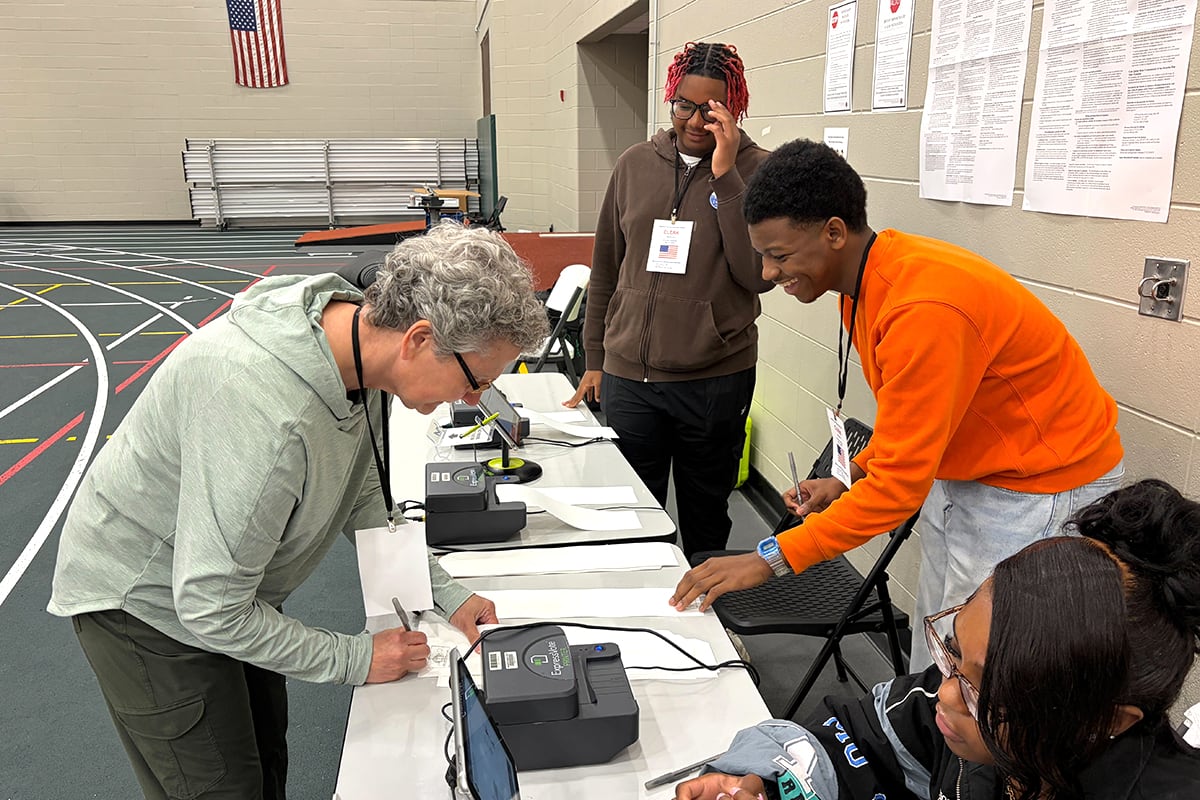
The Lawrence North High School senior woke up excited to serve as a poll worker on Primary Election Day, despite the rain that fell as he and four other students made their way to the high school to set up the voting site in the gym.
“I was nervous about it, but I was also excited,” Roberson said, recalling the legal aspects of the training he completed. “It just felt nice to do something to help where I’m needed.”
State law allows 16- and 17-year old high school students to serve as a clerk for an election, and lets minors with a GPA of at least 3.0 to do so, with the permission of their school principal and a parent or guardian. Like adult poll workers, these students also get paid for their time and can earn up to $180 for the day in Marion County.
Election offices across the state have used the law to help fill critical election roles. As a poll clerk, students can help set up voting sites and check voters in to receive their ballot. The job is a civic-minded way for students to get paid.
At Lawrence North, senior Alia Massey waved residents through the check-in process with the confidence of someone who has been working elections for years. She credits her civic engagement to her mother.
“Every chance that I get, my mom always pulls me in her room or she just stops and talks about something,” said Alia, who plans to join the military after graduating in May. “She’s like, ‘Okay, you need to watch this, because you need to actually know what’s going on.’”
Though Alia and most of the other student workers at the high school are already 18, they found out about the opportunity to work a poll site through a visit from the League of Women Voters to their school.
At the other end of the check-in table, Lawrence Central High School junior Jameon Gibson listed acceptable forms of identification to voters who trickled in.
“Is it going smoothly?” one woman asked him as she showed her identification.
“It is,” he said.
Lawrence North senior Kylie Atkinson said she wanted to experience what it would be like to assist in the voting process. Often, she said, it feels like she and her peers can’t be politically involved because of their age.
“If I get the experience myself, I can explain it to other people and explain how to do it to other people,” she said. “But I think it’s really important that you have all demographics represented in any kind of democracy.”
Amelia Pak-Harvey covers Indianapolis and Lawrence Township schools for Chalkbeat Indiana. Contact Amelia at apak-harvey@chalkbeat.org.