Sign up for Chalkbeat Philadelphia’s free newsletter to keep up with news on the city’s public school system.
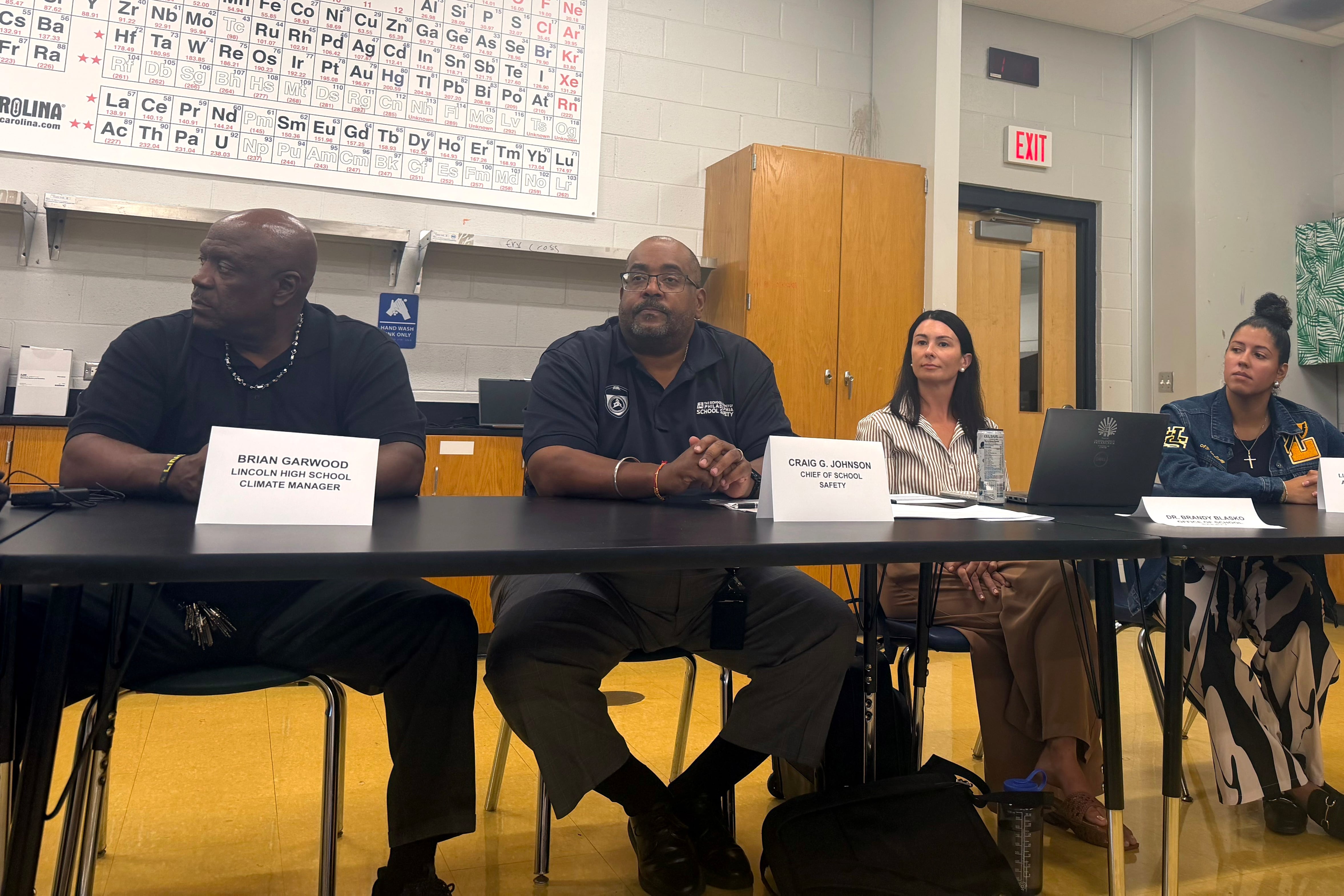
With a new school year underway, School District of Philadelphia Chief of Safety Craig Johnson is determined to maintain the downward trends he’s been seeing in student violence.
The number of weapons confiscated from students dropped about 67%, from 516 in the 2021-22 school year to 171 in the 2024-25 school year, according to district-provided data. Knives are the most commonly found weapons, and firearms typically account for about 4% of confiscated weapons.
The total number of student assaults and fights dipped 22% districtwide from 2021 to 2025, according to a Chalkbeat analysis of serious incident reports.
Still, parents have expressed worries about violence throughout the year, arguing that the district’s plan to shutter 17 campuses in fall 2027 could escalate existing tensions between students from different schools.
Johnson said his team has been working to build a culture of safety in Philadelphia schools, from training a small faction of the district’s school safety officers in conflict mediation to offering post-fight “stabilization groups” and ongoing care sessions through a partnership with the city’s behavioral health department.
John Bartram High School in West Philadelphia uses a model called the Youth Violence Reduction Initiative, which provides mentorship and case management to students at risk of violence, and saw significant drops in both fighting and gun violence perpetrated by students.
The district also works with local organizations such as the Philadelphia Anti-Gang, Anti-Violence Network, or PAAN, for help breaking up campus fights and preventing street violence near schools.
Chalkbeat Philadelphia spoke with Johnson about what’s worked, and what’s next.
This interview has been edited for length and clarity.
Why do you think these incident numbers have been trending down?
Our training changed, and so we really focus on building relationships with students and meeting them where they are … allowing us to be more proactive and intervene prior to violence occurring.
When does the school district partner with outside organizations to train staff or mediate conflict?
Sometimes the concern is when adults are involved. We’re equipped to handle children. When you have adults involved as well, we need a little outside assistance. Getting folks in a room and just having a discussion and trying to iron out what the issue is. And getting everybody to come to some common agreements of how they’re going to comport themselves and behave themselves.
What are some of the primary channels where you hear about a conflict brewing between students?
We firmly believe every child needs an anchor. At least one anchor, and that’s a person that you can go to to talk to about anything, without fear of judgment or reprisal. And I think our department and the district as a whole has done a really good job of making that the culture in our schools. I don’t believe there’s a student out there in any school that doesn’t have at least one adult in that building that they’re comfortable talking to. And so the majority of our information comes from students who think something may be wrong. Students don’t want to see violence.
What’s happening to keep things calm at dismissal?
We all know that fights can happen at any time. Sometimes we have advance notice of a potential issue at dismissal time … Or if there had been some kind of an altercation in school during the day that we’re aware of, we will usually bolster our presence outside, either through the use of our patrol resources or some support from the Philadelphia Police Department, who we share an absolutely tremendous working relationship with. They provide outstanding support to the school district on a daily basis.
What else is on the horizon?
I’m just looking forward to a great school year. I’m very hopeful that the numbers continue to trend downward as they have for the last couple of years, and we will continue to work with our men and women to be a big part of that.
This story is part of a collaboration between Chalkbeat Philadelphia and The New York Times’s Headway Initiative, supported by the Stavros Niarchos Foundation (SNF) via the Local Media Foundation.
Sammy Caiola covers solutions to gun violence in and around Philadelphia schools. Have ideas for her? Get in touch at scaiola@chalkbeat.org.