Sign up for Chalkbeat’s free weekly newsletter to keep up with how education is changing across the U.S.
Data analysis by Kae Petrin.
The number of students taking courses designed to help them pass after failing a class — classes often compressed to just a few weeks administered online — rose significantly since before the pandemic.
The increase in credit recovery enrollment nationally was likely fueled by more students failing classes during the COVID pandemic and the rise of virtual education. Credit recovery encompasses a broad range of programs, but generally allows students to earn missed course credits so they can graduate from high school on time.
High school credit recovery has long been a controversial stop on the way to graduation for some of America’s struggling students. Champions of these programs say they help vulnerable students graduate when they otherwise wouldn’t, and some superintendents say they’re an important tool. But while the programs may help more students cross the finish line, skeptics say they also allow students to skate through while accomplishing little academically.
The number of students enrolled in credit recovery courses increased by 13% following the pandemic, according to a Chalkbeat analysis of federal data comparing the 2017-18 and 2023-24 school years, the most recent data available. The 2017-18 data reflects the closest collection taken prior to the 2020 COVID-19 school shutdowns.
In North Carolina, the number of students enrolled increased by 173%, from 16,882 to 46,133 in the 2023-24 school year. In Maryland, enrollment increased by 75%.
Samantha Viano, an education professor at Johns Hopkins University who studies credit recovery, said she was not surprised by the rise. Students struggled and failed more courses when schools halted in-person classes during the pandemic.
Research provides strong evidence that schools are using credit recovery programs to increase four-year graduation rates, she said, an important metric used to judge a high school’s success. But the trade-off might be that students aren’t learning what they were supposed to in the classes they failed and are instead simply checking off a box.
“They are pushing students into credit recovery sometimes in the middle of the school year when they haven’t even failed the class yet,” she said.
The new data comes from the U.S. Department of Education’s Civil Rights Data Collection, which includes a vast array of information from every public school in the country. The data is self-reported by school districts and then processed by the Education Department, which has laid off staff members in the Office for Civil Rights. There have been ongoing questions about data quality under the second Trump administration.
Some of the nation’s largest school districts showed substantial increases in credit recovery enrollment. In Houston’s school district, the number of students enrolled in credit recovery rose by 122%, from 12,202 students to 27,074, even as total district enrollment fell during the same time period.
Houston has been under state takeover since 2023. The superintendent installed by the state, Mike Miles, has been praised for improved school ratings under the state’s accountability system. But a recent Houston Chronicle investigation examining the increase in students taking controversial online college prep courses — Miles disputed the newspaper’s analysis — has cast doubt on those improvements. The state accountability ratings also take graduation rates into account, which may be affected by an increase in credit recovery enrollment.
Houston’s press office did not respond to multiple requests for comments about credit recovery numbers.
In Philadelphia, district leaders have not been shy about using credit recovery as a strategy to get students to graduation. Credit recovery enrollment more than doubled from 1,459 to 3,624 students, a 148% rise, the data shows. The district has promoted summer credit recovery programs for students deemed academically off-track.
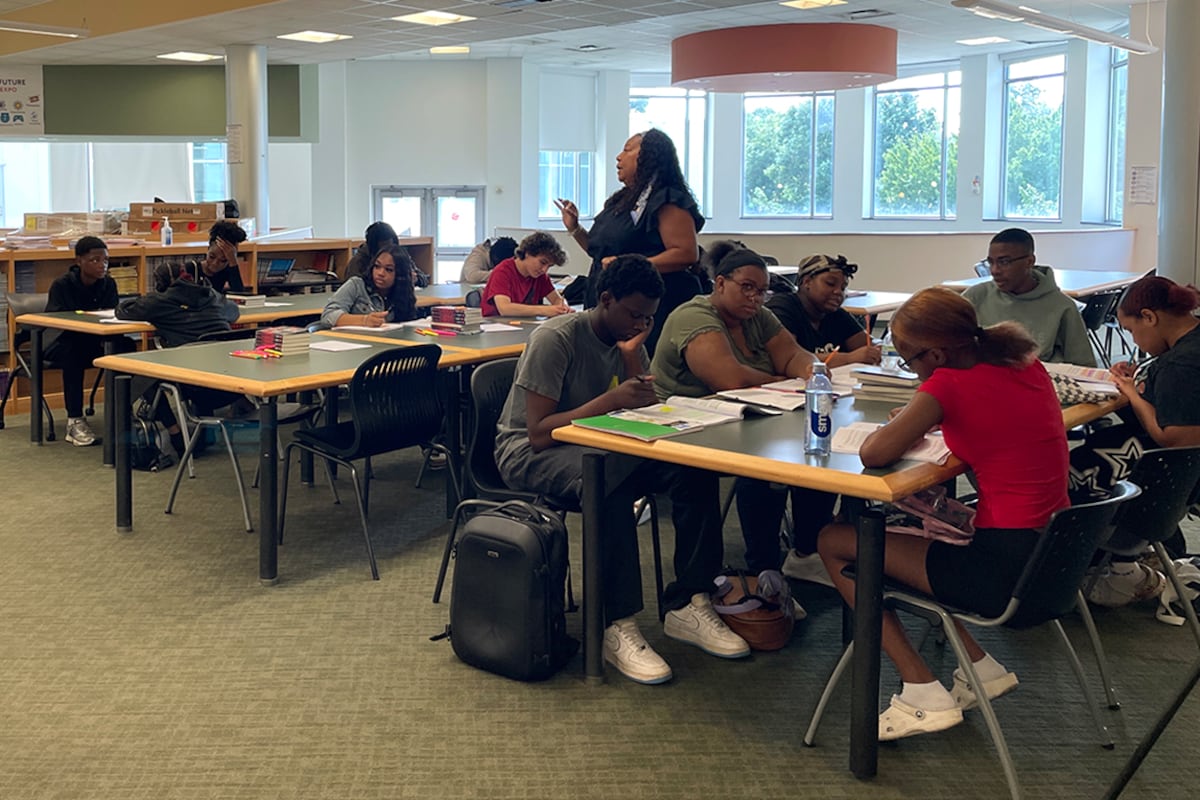
At a credit recovery program this summer, Superintendent Tony Watlington said getting students to graduate saves “young people’s lives.”
“When kids graduate and don’t drop out of school, we save the taxpayer in the city of Philadelphia and the Commonwealth of Pennsylvania $405,000 right off the bat,” Watlington said. “Dropping out of school really is a life or death issue in Philadelphia, as well as many other places around the country.”
One study found that every dropout costs the city $357,000 over their lifetime, while graduates have a positive economic impact of $48,000. Another 2019 report found that more homicides occur in census tracts with low proportions of high school graduates. Officials in that report identified increasing graduation rates as one strategy to reduce violence.
While national test scores have largely stagnated or declined in key subjects like math and reading, graduation rates continue to creep up nationally. The use of credit recovery to help students graduate could be playing a role.
But there’s also evidence that online credit recovery courses could hurt students down the line: It’s associated with lower wages after high school. Online credit recovery is also not heavily regulated by states.
While graduation is important, Viano said it is also vital to consider those other outcomes.
“Honestly, I have found schools and districts to be very blasé about their credit recovery enrollment and not really understand who’s in those classes, what they’re doing in those classes, how long it takes them to work on them,” Viano said. “Which is part of the reason why we’re concerned about other kinds of outcomes other than high school graduation, because it’s such a wild west.”
If you are having trouble viewing this form, go here.
Chalkbeat Philadelphia reporter Rebecca Redelmeier contributed reporting for this story.
Lily Altavena is a national reporter at Chalkbeat. Contact Lily at laltavena@chalkbeat.org. Lily is on Instagram, Tik Tok, and Facebook.