Sign up for Chalkbeat Colorado’s free daily newsletter to get the latest reporting from us, plus curated news from other Colorado outlets, delivered to your inbox.
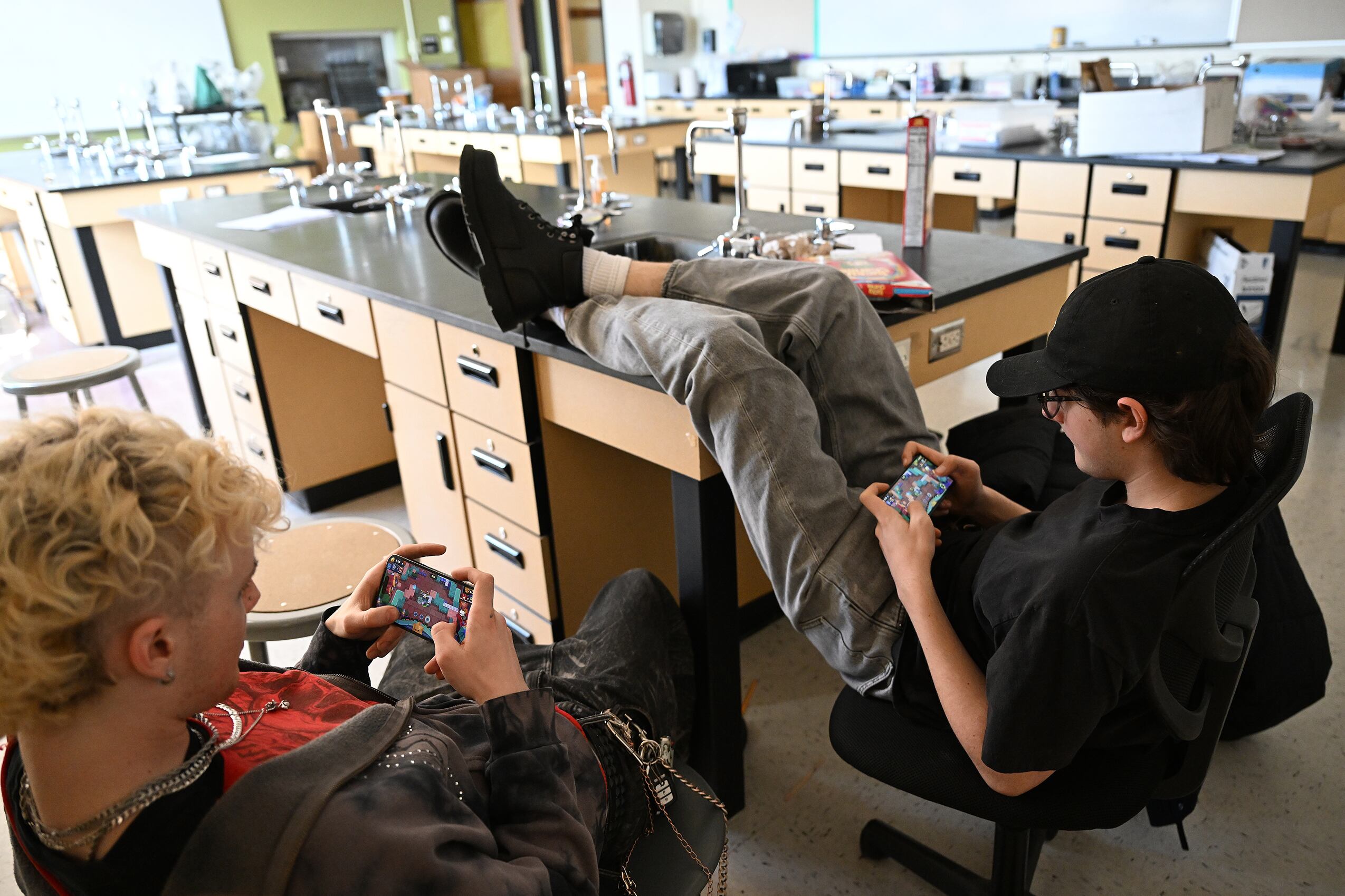
Microtransactions in online games, such as buying “loot boxes” of virtual items, would be subject to a 5% fee under a bill being considered by Colorado lawmakers, with the revenue going to public schools.
House Bill 1148 is a wide-ranging bill aimed at enhancing data privacy for children who use online gaming platforms like Roblox and Minecraft. The 5% fee on what the bill calls add-on transactions would generate over $20 million annually for public education, according to a state estimate.
The fee is only one small part of the legislation, but it generated a lot of discussion and questions at a hearing Wednesday before the Colorado House Judiciary Committee.
“If kids are spending money in your ecosystem,” Rep. Jenny Willford, a Northglenn Democrat and co-sponsor of the bill, said of online gaming platforms, “then a portion of that should come back to support their well-being in the real world.”
The committee heard testimony but did not vote on whether to advance the bill. The bill sponsors asked that the vote be postponed to a later date.
Several lawmakers on the committee said they agree that kids spend too much time on screens, which they said can have negative effects. The bill sponsors also referenced lawsuits alleging that Roblox failed to protect children from adult predators. But Republican lawmakers questioned if the 5% fee was warranted and whether it runs afoul of Colorado rules.
“We’re essentially taxing children,” said Rep. Ava Flanell, a Colorado Springs Republican.
Rep. Matt Soper, a Republican from Delta, repeatedly asked whether the bill would violate Proposition 117, which was passed by Colorado voters in 2020. It requires that any fee that would generate $100 million or more in its first five years get voter approval.
Willford and co-sponsor Rep. Yara Zokaie, a Fort Collins Democrat, said they were still working on that part of the bill. They mentioned a proposed amendment that would put some of the $20 million toward after-school programs but did not formally introduce it Wednesday.
“This fee was not put in place as a deterrent” to making in-game purchases, Zokaie said. “The intent of this fee is to give children a chance to give back to programs that help them.”
Zokaie, who has three children, also noted that, “it is mostly parents’ money. I can attest to that.”
The bill attracted support from groups including the Boys & Girls Club and the Colorado Coalition Against Sexual Assault. Several people who testified described themselves as longtime gamers who love online games but support stricter protections for children.
Representatives from the Entertainment Software Association, a trade association for the video game industry, and TechNet, a network of technology CEOs, testified in opposition. Among other arguments, they said the bill is likely to draw a lawsuit.
Melanie Asmar is the bureau chief for Chalkbeat Colorado. Contact Melanie at masmar@chalkbeat.org.