Sign up for our free monthly newsletter Beyond High School to get the latest news about college and career paths for Colorado’s high school grads.
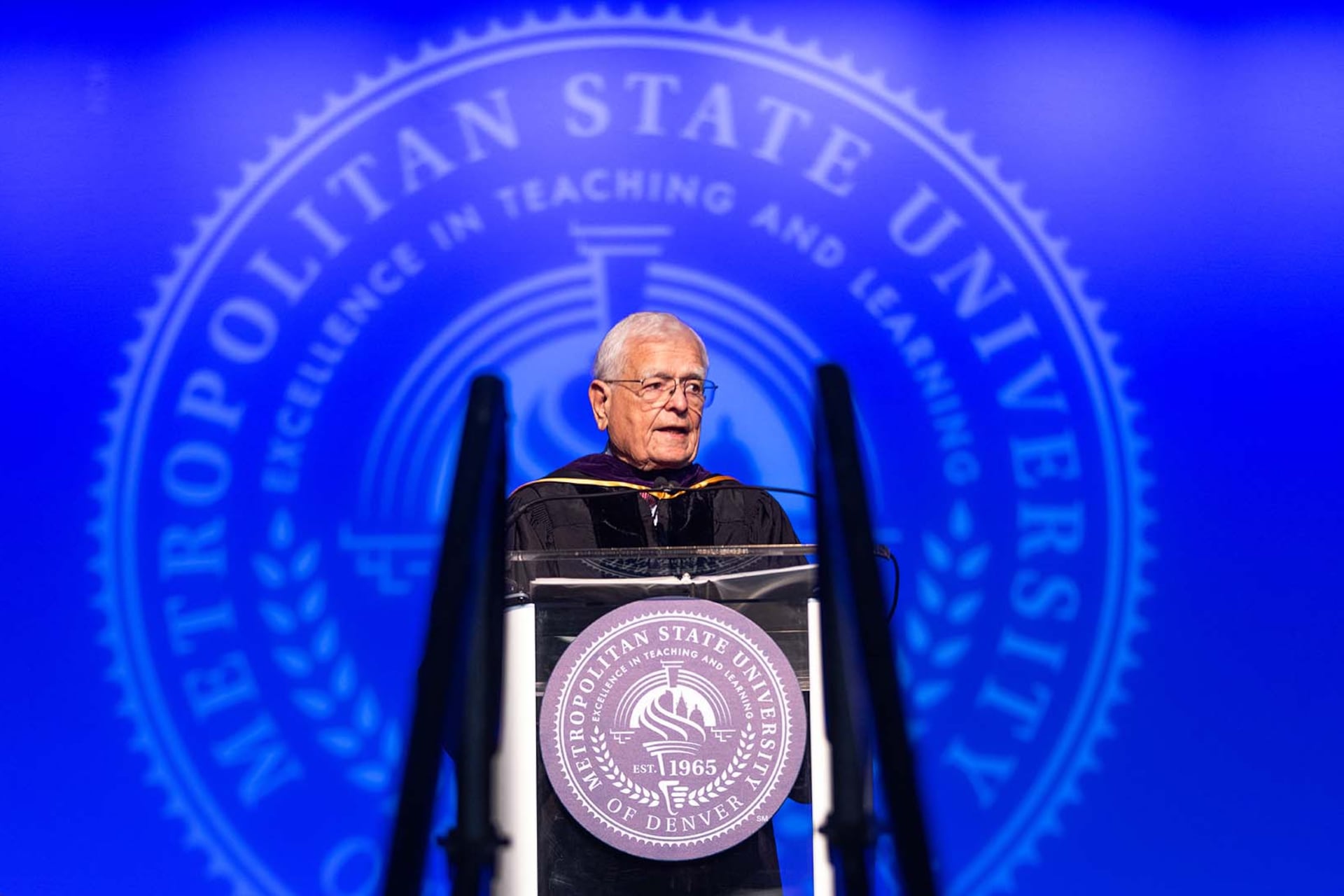
Former Colorado Gov. Roy Romer has donated his gubernatorial archives to Metropolitan State University and $2 million to a research institute he has supported that will now be affiliated with the university.
MSU Denver officials expect the move by the 97-year-old former lawmaker will open up research opportunities, as well as public policy and leadership lessons for students from lower-income backgrounds who are less likely to have grown up civically and politically engaged. The commuter campus of about 18,000 students also educates many students of color and is one of the most diverse universities in the state.
Romer has a personal tie to the university. Romer was a state lawmaker from 1958 to 1966 and sponsored legislation in the 1960s to establish MSU Denver. Romer, a Democrat, later served as Colorado governor from 1987 to 1999.
Romer said the papers he’s donating include some of his notable accomplishments such as championing Denver International Airport and vetoeing a ban on same-sex marriage. Romer also intends to donate additional papers from his tenure as superintendent of the Los Angeles Unified School District from 2000 to 2006, according to a spokesperson.
“I hope in the case studies, they [students] can look at the history that unfolded in that period of time and figure out what made it happen,” Romer said in an interview. “What were the ingredients of leadership?”
The newly renamed Romer Institute of Evidence-based Policy, formerly the Institute of Evidence-based Policy, will operate independently of the school and help bring speakers and ballot measure forums to the campus. The nonprofit says it has a commitment to evidence-based research that helps inform public policy decisions.
MSU Denver’s Matthew Makley, a provost and executive vice president of academic affairs, said the archives will help create internship opportunities for students to digitize the papers and help them write senior papers. And he’s especially excited that the donation will allow students to do more research. The school isn’t a designated research university, even though it does offer some opportunities to master’s and bachelor’s degree-seeking students.
The archives and the partnership with the institute will help students see themselves as the future policymakers, policy advisers, and leaders of Denver and the state, he said.
“This will be an opportunity for us to help students think about carving space in a domain they may not have ever imagined themselves moving in,” Makley said. “And that’s really the beauty of the institution that Governor Romer dreamed of.”
Jason Gonzales is a reporter covering higher education and the Colorado legislature. Chalkbeat Colorado partners with Open Campus on higher education coverage. Contact Jason at jgonzales@chalkbeat.org.