Sign up for Chalkbeat Colorado’s free daily newsletter to get the latest reporting from us, plus curated news from other Colorado outlets, delivered to your inbox.
Just weeks after the permanent closure of a controversial “public Christian school” in southern Colorado, its leader is pitching a new venture that involves public funding for students who opt out of public schools: overseeing homeschool enrichment programs.
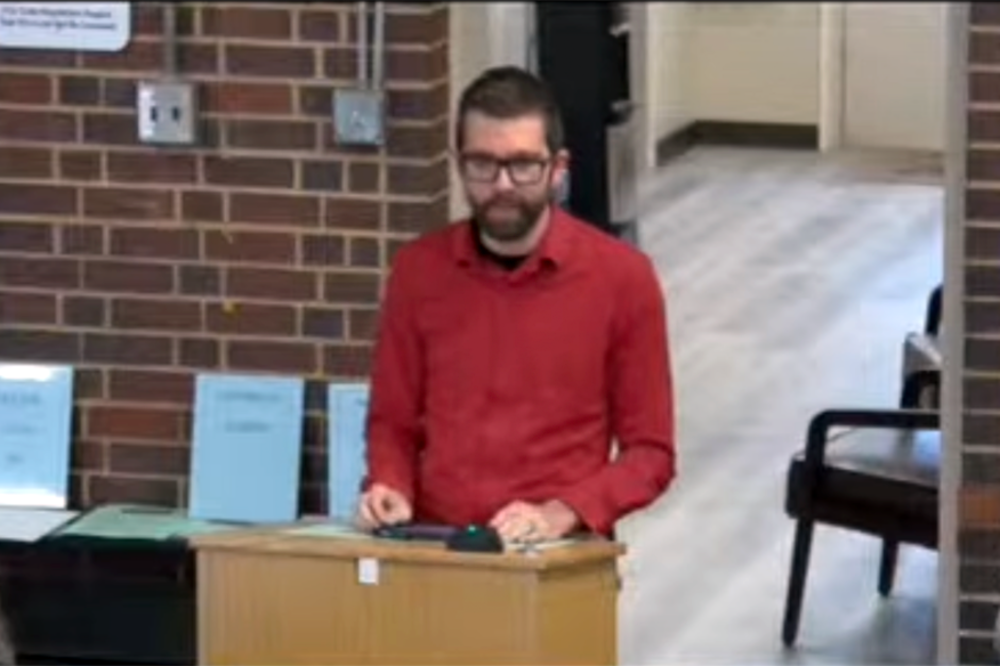
On Tuesday, Quin Friberg, former executive director of Riverstone Academy, asked the Pueblo County District 70 school board to consider contracting with a nonprofit he created last month called Keystone Education Services. His new pursuit comes after recent state law changes that will require some publicly funded enrichment programs to seek new authorizers. The changes also forced Riverstone, which was located in District 70, to close last month.
“We created this organization to partner with school districts or charters to help monitor compliance around home school enrichment programs,” Friberg told the school board.
But after months of community pushback and legal problems related to Riverstone, the District 70 school board was divided on Friberg’s latest proposal.
“We have just been through hell on account of Pastor Friberg,” board member Mark Emery said.
“I’m not sure what that’s a reference to, but continue,” Friberg said.
“Your school,” Emery said.
“My school. Oh!” said Friberg, sounding surprised.
Board President Ann Bennett spoke in favor of the Keystone proposal, saying it would create new educational choices for local families.
Bennett said opposition to the proposal “is because there’s a chip on people’s shoulder because of Quin and because of Brad (Miller), and I’m not willing to sacrifice the 70 homeschool students for a vendetta.”
A leaked email written by Miller, a Colorado education lawyer, revealed last fall that Riverstone was started at the behest of a conservative law firm hoping to spark a religious liberty case that would go to the U.S. Supreme Court. In May, the case fizzled when it became clear the school would close for good.
One District 70 board member, Susie Carnes, is also on the board of Keystone Education Services. She said little during Tuesday’s discussion, and it’s unclear if she’d recuse herself from a vote on Keystone, which could take place later this summer.
Contracting with Keystone Education Services could demand a leap of faith for Colorado districts given the history of Friberg’s now-defunct school. During its 10-month existence, Riverstone was involved in lawsuits against the county and the state, was forced to vacate its building because of safety concerns, and its authorizer settled with the family of a Riverstone student for $20,000.
The 10,000-student District 70 district is also coming off a tumultuous year peppered with conflicts over Riverstone. The school board faced infighting over a controversial school board vacancy appointment and accusations that some board members failed to recuse themselves from key votes in which they had conflicts of interest. The board is also embroiled in a lawsuit over open meeting violations stemming from Riverstone’s launch.
Colorado lawmakers this spring put strict new limits on the authorizing power of the state’s 21 Boards of Cooperative Educational Services or BOCES. It was largely a response to Education reEnvisioned BOCES, the Monument-based co-op that authorized Riverstone and scores of homeschool enrichment programs across the state.
The law change bars the co-ops from authorizing schools or enrichment programs outside their member districts and means that dozens of homeschool enrichment programs previously authorized by Education reEnvisioned will no longer get public funding unless they get approval from a local district or charter school.
According to Friberg’s presentation, Keystone would serve as a sort of middleman between school districts and any homeschool enrichment program they authorize. Such publicly funded programs typically offer about six hours a week of tuition-free classes to homeschoolers. Some include math, reading, and electives such as art, music, and physical education. Others fill a specific niche: forest schools, aviation classes, or performing arts programming.
It’s not clear how many students in Pueblo 70 would participate in Keystone-supervised enrichment programs. Superintendent Ronda Rein, who’s retiring this month, estimated there are about 70 homeschoolers currently known to the district. Friberg suggested the number could eventually be hundreds.
Keystone would get a 6.5% cut of the state money that flows to enrichment programs in exchange for vetting new enrichment programs for school districts and providing oversight once they start. Districts would get to keep another 6.5% of the state money, Friberg said.
On average, the state pays about $6,000 per homeschool enrichment student.
Rein said a contract with Keystone would put a new burden on district administrators and expose the district to liability if something went wrong.
Friberg told the District 70 board he’s shopping his Keystone proposal to districts across Colorado, with upcoming meetings in Westcliffe and Grand Junction. He said he’s also reached out to every BOCES in the state.
A handful of community members spoke about the Keystone proposal Tuesday evening.
Jennifer Holderman, who homeschools two of her children, said the district should support homeschool families with enrichment programming because they are part of the district too.
“We live here, we raise our children here, we volunteer here … Choosing a different educational model does not mean choosing to leave the community.”
Another district parent, Hannah McDowell, was sharply critical of Friberg’s proposal.
“Keystone Education Services is literally a brand new, made-up entity dabbling in messy legal technicalities, much like Riverstone Academy was,” she said. “And look how all that turned out: lawsuits, safety violations, damaged reputations, and outrageous amounts of money wasted.”
Ann Schimke is a senior reporter at Chalkbeat. Contact Ann at aschimke@chalkbeat.org.