Did you know search engines like Google are changing the way you see news? Keep Chalkbeat’s valuable education coverage at the top of your feeds by clicking here and checking the box next to our name.
Colorado may be leading the way among a small band of optimists who see opportunity for public schools in a new Trump-backed tax credit that others say will spell doom.
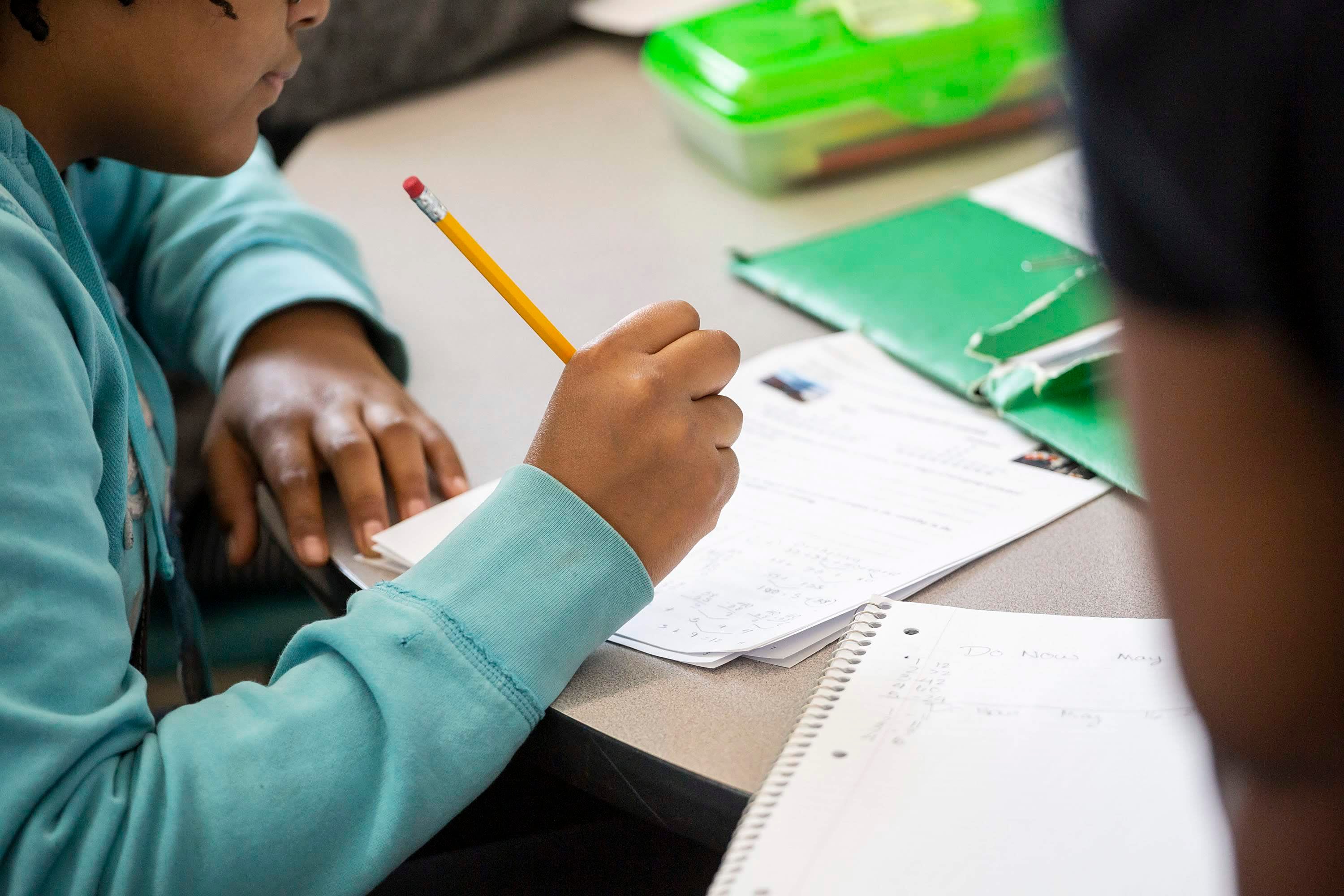
A loose coalition of public school supporters in Colorado are hustling to take advantage of the program, which reimburses taxpayers up to $1,700 for donations to scholarship-granting organizations that then give the money to families for educational expenses. Supporters anticipate public school students could use the money for things like tutoring or SAT prep.
The reason for the rush is partly political: While Democratic Gov. Jared Polis was an early blue-state adopter of the idea, his term is coming to an end. The next governor might not be so keen — and he’ll have to renew Colorado’s participation in 2028 or the program won’t continue.
Democratic gubernatorial nominee Phil Weiser has said he’s a “firm no” on the program and that anyone who thinks it’s benign is either “naive or misleading people.”
“There is the urgency in Colorado to make sure we have a chance to give this a fair shot,” said Antonio Parés, a former teacher and consultant who is helping public school groups take part in the program. “We want to be able to demonstrate to whoever the next governor is that this is a mechanism that is worth keeping because it is benefiting public schools.”
The tax-credit scholarship program was passed by Congress as part of last year’s One Big Beautiful Bill Act. Set to go into effect Jan. 1, it has the potential to raise billions of new dollars for schools. Private school students who pay tuition are the most obvious beneficiaries, which is why so many public school advocates are skeptical if not outright hostile.
But the law allows public school students to take advantage of the scholarships, too — though doing so might take a bit more creativity.
“You can stand on principle and say, ‘We’re not going to do this because this is a voucher scheme,’ but then who benefits?” said Shannon Hancock, the chair of the Colorado Public Schools Foundation, an association of school district foundations, and executive director of the Five Star Education Foundation, which benefits the Adams 12 Five Star district.
Hancock and Parés are part of a group that has been meeting for months to brainstorm ideas. Parés said it started with simple questions: Could this money be used to pay for after-school tutoring? Advanced Placement test fees? Fifth-day programming in the more than 130 school districts, most of them small and rural, that operate on four-day school weeks?
Initial guidance does not go into detail about how the money could be spent. But Parés said the answer seems to be yes. Even if the program was created for private schools, Parés thinks public schools have a leg up.
“There’s just more potential donors in the public ed world than there are in the private ed world,” Parés said. “From a pure numbers game, this is way better for public ed.”
At least three Colorado organizations are jumping in: the Colorado Public Schools Foundation, the Denver Public Schools Foundation, and RESCHOOL, which has been giving out “learning dollars” to pay for everything from math tutoring to swim lessons for more than a decade.
All three are creating new, separate nonprofit organizations to serve as scholarship-granting organizations, or SGOs. Since only about 20 of Colorado’s more than 170 school districts have foundations, the idea behind the Colorado Public Schools Foundation SGO is to help all districts access the federal tax-credit money, Hancock said. Districts could sign an agreement with the statewide SGO that would allow local taxpayers to donate their $1,700 directly to that district.
Philanthropy currently funds all three organizations. That will likely continue. But the two school district foundations in particular are looking at the federal tax credit dollars as a new revenue stream that will allow them to redirect their philanthropic dollars elsewhere — and perhaps allow school districts to do the same with their state and local funding.
“My attitude is what’s good for a student makes that school better,” said Sara Hazel, the president and CEO of the Denver Public Schools Foundation, which raises money for the state’s largest district. “If a student is on grade level in reading and math, that will change that student’s trajectory in tangible ways. And the school will have the capacity to do other things.”
In an interview, Polis said one of the biggest challenges is the tight timeline. Colorado has until December to vet any SGOs that want to participate and submit a list to the federal government to cement the state’s participation in the program.
“I’ve talked to several governors about it,” he said. “I always start by saying: ‘As a Coloradan, I hope you don’t participate because then residents of your state can donate to Colorado. But as an American, I hope that you do because I care about the kids in your state, too.’”
Some blue-state governors might wait a year or two to see how the program plays out in Colorado and other Democratic strongholds before making a decision, said Michael Petrilli of the center-right Thomas B. Fordham Institute. Will public school students really benefit? Or will most of the money flow, as Petrilli predicts, to private schools?
Colorado’s next governor, who will likely be Weiser, might be watching with the same eye.
Chalkbeat National Editor Erica Meltzer contributed to this report.
Melanie Asmar is the bureau chief for Chalkbeat Colorado. Contact Melanie at masmar@chalkbeat.org.