Sign up for Chalkbeat New York’s free daily newsletter to get essential news about NYC’s public schools delivered to your inbox.
This originally aired on The Bell’s Miseducation podcast on June 18.
In New York City schools, restorative justice – or RJ – has been around for almost a decade. It’s a way to repair harm by bringing together the person who caused it, the person affected, and the community.
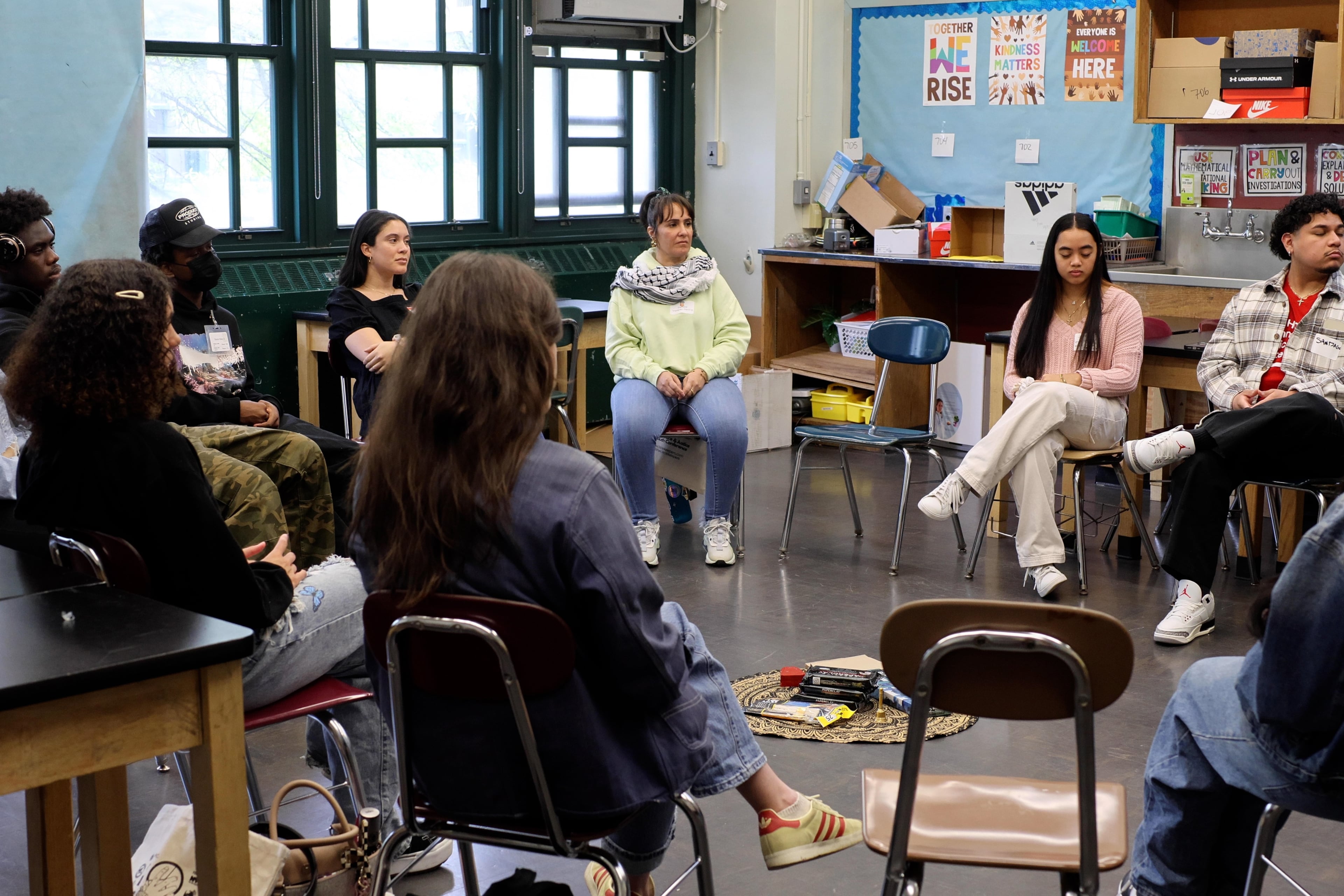
Restorative justice circles are designed to help students heal, take accountability, and build stronger communities, but too often they feel like just another routine. Most RJ schools rely on circles — structured conversations that serve three tiers: Tier 1 community-building before harm occurs; Tier 2 conflict resolution when harm happens; and Tier 3 reintegration after healing.
At my Brooklyn high school, we sit in a circle twice a week, yet phones stay out and eyes glaze over. Far from the healing practice they’re meant to be, these sessions can become checkbox exercises.
As a peer mediator and RJ leader, I’ve seen both their promise and their pitfalls. Black students are suspended 3.4 times more than their white peers. Studies show that even minor suspensions can derail academic achievement for years. A 2022 citywide study found that some students “do not care, do not pay attention, or fall asleep during circle”. I see my peers doing the same. So I started asking: What would it actually take to make it work? And how should we reassess success — beyond suspension rates — to include trust, student voice, and genuine community healing?
Join me as I dig into the gap between adult-led and student-led circles, sit down with restorative justice facilitator Javon Lomax, and make the case that real healing demands students, not just staff, at the forefront.
This is a video-first episode. You can watch it now on YouTube.
Miseducation is The Bell’s flagship podcast, which gives New York City public high school students the tools to report on inequities in the nation’s largest school system.
Never miss an episode! Subscribe on YouTube | SpotifyApple Podcasts | Google Play | Stitcher