Sign up for Chalkbeat New York’s free daily newsletter to get essential news about NYC’s public schools delivered to your inbox.
The tide is quickly turning against screens and artificial intelligence in schools — at least in New York state.
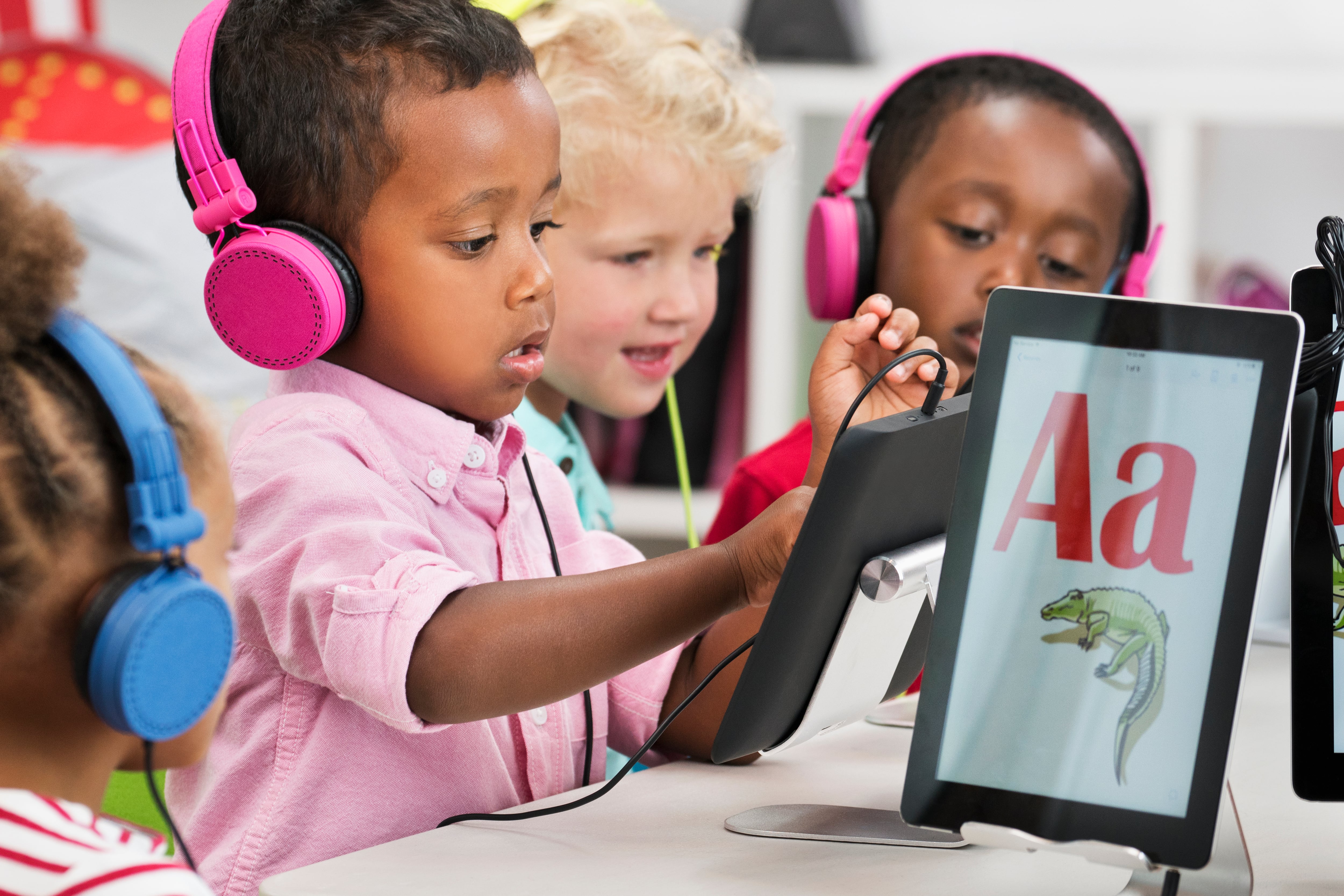
The state’s teachers union is the latest to join the grassroots parent efforts to limit screens and AI, passing a resolution this weekend calling for a ban on individual students’ screen use in prekindergarten through second grade, including online assessments.
It also calls for banning student-facing AI for these young learners, as well as prohibiting AI chatbots for students under 16.
Gov. Kathy Hochul also expressed concerns on Monday about screen time in schools.
The resolution from New York State United Teachers, or NYSUT, which is the umbrella union of New York City’s United Federation of Teachers, comes on the heels of a push for a nationwide strategy to curb technology use in schools from its parent union, the American Federation of Teachers. AFT President Randi Weingarten last week called for similar limits in her “devices-down, eyes-up, hands-on” plan.
The resolution from the state teachers union comes as New York City is rethinking its policies on artificial intelligence in schools. Schools Chancellor Kamar Samuels recently called AI the “most invasive technology that we’ve seen” and signaled the Education Department may create clearer guardrails for the city’s youngest students, after significant criticism of the city’s initial draft policy.
“Educators are not anti-technology. We are pro-child,” NYSUT President Melinda Person said in a statement on Monday. “Every decision made in the name of innovation must actually serve the students in our classrooms.”
Meanwhile, Hochul said Monday that it is “definitely worth looking into” limiting screen time for younger students. She would take a similar approach to studying this as she did before implementing banning cell phones, she said at a press conference celebrating the first year of the state’s school cellphone ban.
“I spent a year going around the state, gathering information, assessing it, analyzing it, and coming up with a really solid policy,” Hochul said, “so I would engage in that before I would give an answer on how I feel about this, but I’m learning a lot as a parent and grandparent.”
Several districts or states are limiting or looking into limiting screens in schools. Los Angeles schools are moving to ban screens until second grade. Iowa recently passed a law limiting screens in schools. Tennessee and other states are considering limits.
How the national backlash to education technology will affect classrooms in the nation’s largest school district remains to be seen. An upper Manhattan superintendent instituted a “screen break” last week at a parent advocate’s request. But the state teachers union is pressing for broader change.
NYSUT’s resolution, for instance, calls for banning online assessments for young children. Since the pandemic, schools across the five boroughs have been giving students assessments in reading and math three times a year to gauge their progress. Many schools use online tools from i-Ready or MAP Growth starting in kindergarten for the math assessments. (The Acadience Reading assessment for K-2 students is not device-based.)
As New York transitions to digital standardized exams for students across the state in grades 3-8, some educators have raised concerns that test preparation will increasingly rely on devices, too. The union’s resolution calls on the state to maintain paper and pencil options.
Students are “spending excessive time preparing for computer-based testing, completing mandated screen-based programs, and engaging in passive technology use that interrupts student-teacher engagement,” the resolution states.
A spokesperson for the state’s Education Department did not respond to a request for comment.
The union’s resolution also calls for requiring that using AI in any grade must be “educator-led” and designed to “promote critical thinking, digital literacy, and civic readiness, rather than replace human instruction, creativity or judgment.”
Teacher unions are also trying to walk a tightrope as they navigate the latest education technology backlash. The AFT and New York City’s teachers union, the United Federation of Teachers, launched a partnership last year with OpenAI and Microsoft to help train educators.
“There are conversations at every level about how to scale back screen time for students, especially our youngest,” Mary Vaccaro, the UFT’s vice president for education, said in a statement.
“At the same time, the UFT and its national union, the AFT, are trying to help educators better understand and navigate AI, whether that’s learning how to protect their students or how to harness the tool for their own work.”
Alex Zimmerman is a senior reporter for Chalkbeat New York, covering NYC public schools. Contact Alex at azimmerman@chalkbeat.org.
Amy Zimmer is the bureau chief for Chalkbeat New York. Contact Amy at azimmer@chalkbeat.org.