Sign up for Chalkbeat New York’s free daily newsletter to get essential news about NYC’s public schools delivered to your inbox.
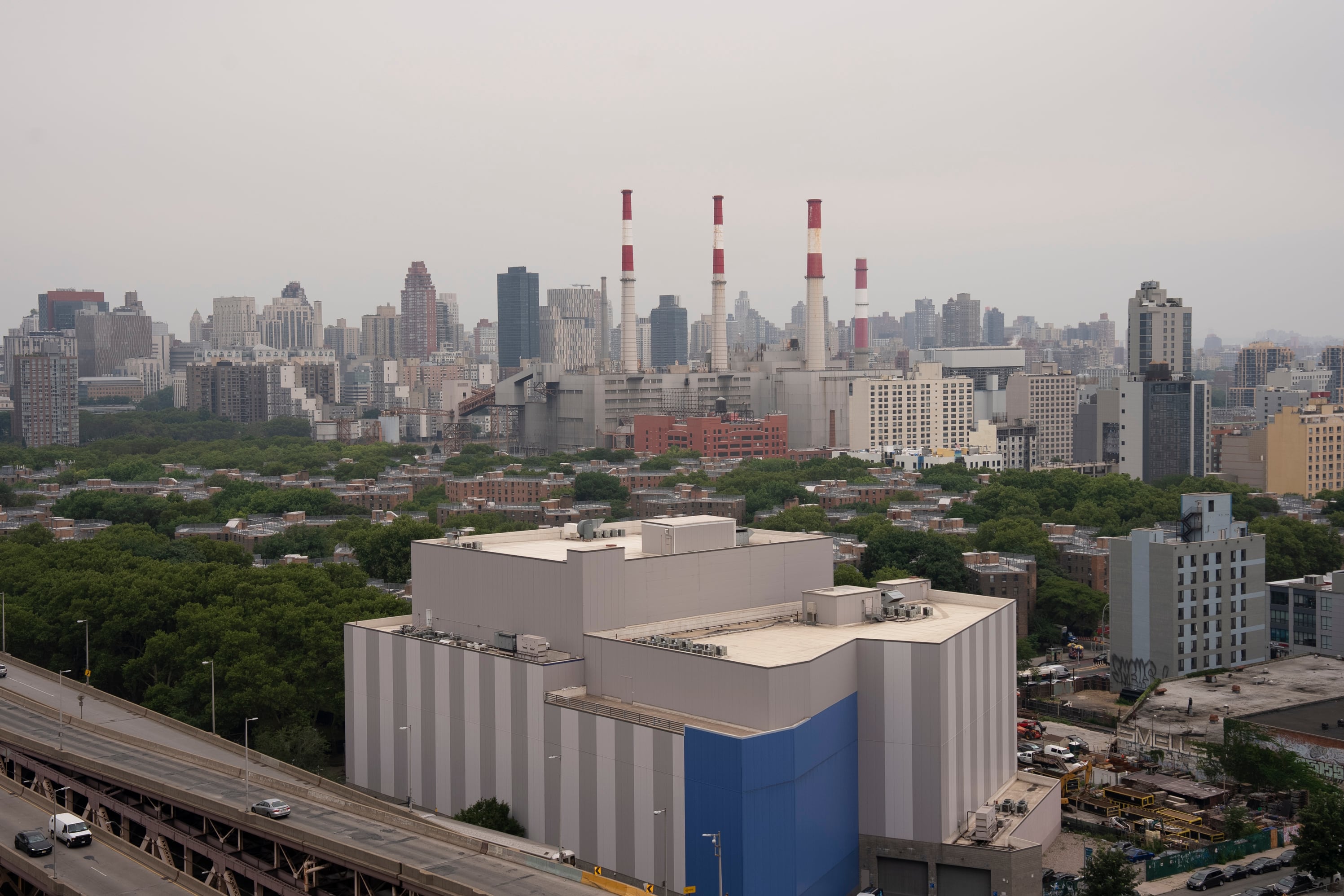
New York City officials urged summer school programs to limit outdoor activity on Thursday as wildfire smoke wafted into the five boroughs.
The Education Department’s guidance to principals also asked schools to reschedule outdoor trips.
The city’s summer school program, known as Summer Rising, has slots for about 110,000 elementary and middle school students this year, offering a mix of academics, enrichment activities, and trips.
Mayor Zohran Mamdani warned in a social media post that the “combination of dangerous heat and unhealthy air is a serious threat to New Yorkers’ health.”
Thursday’s pivot indoors marked the latest heat- or smoke-related disruption to the city’s public schools. During a heat wave earlier this month, summer programs were instructed to cancel outdoor field trips on July 1 and July 2, according to an internal email obtained by Chalkbeat. In June 2023, the school system switched to remote instruction for a day due to wildfire smoke (though most students already had the day off).
Education Department officials said they follow Health Department guidelines on air quality to make decisions about whether outdoor activities are safe for children. They did not indicate whether they plan to issue a similar warning for Friday when the smoke is expected to ease.
One Brooklyn principal supervising a summer school site, who spoke on condition of anonymity to speak candidly, said the heat and smoke has led them to limit outdoor activities on about half of the days of this year’s summer program, which began July 1 and ends Aug. 7 for middle school and Aug. 14 for elementary schools.
As a result, students are getting less time for recess, basketball, and soccer, because a larger number of students must rotate through the campus’s air conditioned gym. They’re playing games like “7 Up” instead.
“It’s really not ideal — there’s not as much space for free play inside,” the principal said, noting staying indoors is important because many of his students have asthma.
The principal did not receive the guidance that Education Department officials sent to school leaders in advance of the smoke on Thursday and was “literally going off the [New York City Emergency Management] text alerts I personally signed up for” to make decisions about when to limit indoor activities.
Grace Bodenmann, chief education officer at New York Junior Tennis & Learning, said her organization moved programming indoors at the 26 Summer Rising sites they work with as well as the two full-day camps they run at charter schools. They made the move based on instructions from the city’s Department of Youth and Community Development, which sent out two emails Thursday morning, she said.
“It’s not that fun to be in a school from 8 a.m. to 6 p.m.,” Bodenmann said, noting that while Summer Rising sites are required to have air conditioning, not all spaces in a building necessarily have AC, particularly some of the larger spaces such as auditoriums, cafeterias, and gyms. “It’s hit or miss,” she said. “And you can’t open the window.”
Under a recent state law, children are not allowed to be in school spaces that reach 88 degrees or higher.
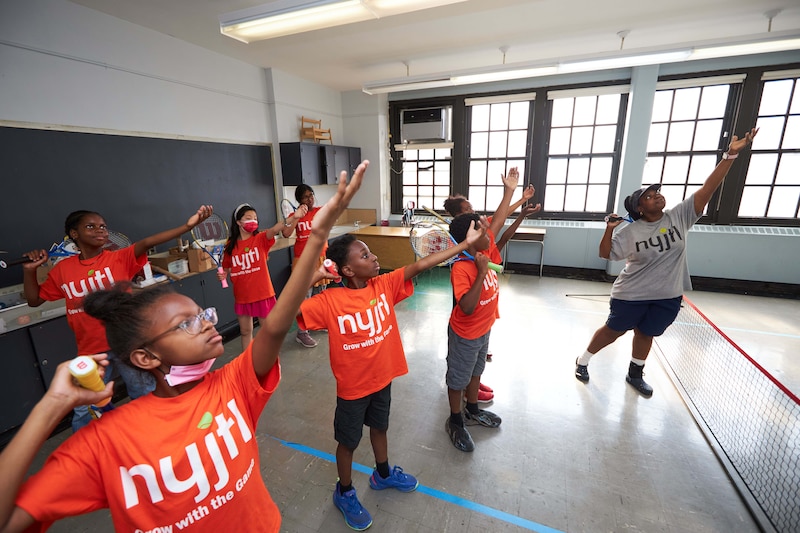
Another challenge: Some of the Summer Rising sites have multiple community organizations in one building jostling for space.
But it’s clear that families rely on the program: Attendance was barely down over the past two days, she said. Bodenmann was eager to find out what would happen on Friday, which is when many organizations organize field trips. Rescheduling those trips can be difficult.
Meanwhile, many of the air purifiers the city distributed to every school during the pandemic are gathering dust. Many educators have stopped using them because of concerns that the devices the city bought are noisy and are not as effective as other models. Although the city’s guidance to custodians directs them to keep windows and doors closed when possible and and check HVAC systems, it does not mention using the purifiers.
Some experts previously told Chalkbeat that school systems should think more intentionally about indoor air quality, especially in regions like the East Coast that have less experience responding to smoky conditions.
“On the West Coast, wildfire smoke has just been part of life for a while,” said Patricia Fabian, an associate professor of environmental health at Boston University. On the East Coast, “people have really only started talking about it in the last couple of years.”
Clean indoor air is important for student and staff health, she said. And while she wasn’t familiar with the purifiers New York City purchased for schools, she said that air purifiers can help filter particles and reduce the risk of wildfire smoke.
Alex Zimmerman is a senior reporter for Chalkbeat New York, covering NYC public schools. Contact Alex at azimmerman@chalkbeat.org.
Amy Zimmer is the bureau chief for Chalkbeat New York. Contact Amy at azimmer@chalkbeat.org.