Did you know search engines like Google are changing the way you see news? Keep Chalkbeat’s valuable education coverage at the top of your feeds by clicking here and checking the box next to our name.
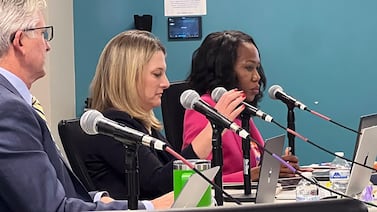
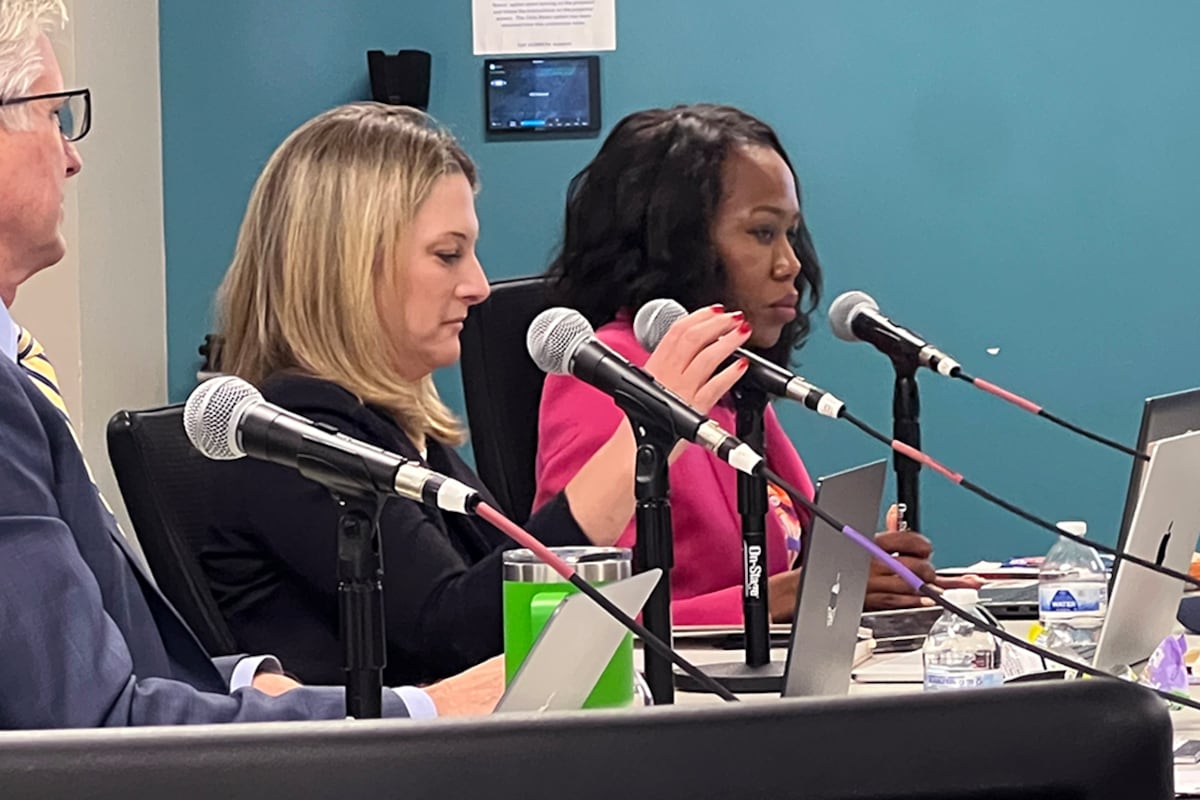
A weeklong independent investigation did not conclude whether Denver school board Vice President Monica Hunter allegedly used antisemitic language. Instead, the investigator wrote that the accusations “boil down to a ‘she said, she said, he said,’” according to the report.
The seven-page report was delivered to the board on Thursday, hours before members were set to discuss the findings and possibly vote to censure Hunter at a meeting that afternoon.
The report says that the only documentation the investigator found about Hunter’s alleged language was a note made by Denver Public Schools Superintendent Alex Marrero after he met one-on-one with Hunter on January 27. Marrero told the investigator that Hunter warned him at that meeting not to trust board member Amy Klein Molk because she was a “Zionist bitch,” the report says. Hunter has denied that accusation.
“The Superintendent’s notes, taken contemporaneously with this meeting include an entry, ‘Vice President Hunter referred to Director Klein Molk as a ‘Zionist b...’ and said she did not want to sit next to her. She also told me she had previously expressed that sentiment to Board President Xóchitl Gaytán,’” the report says.
Hunter told the investigator “there is no such version where that is true,” according to the report. She said the allegations are “retaliation for what some perceive as her initiating conversations about the Superintendent’s continued employment,” and she questioned why it took so long “after she tried to fire him” for the accusations to surface, the report says.
The allegation that Hunter used antisemitic language was the most serious of a slew of accusations that Gaytán levied last month against Hunter and board member DJ Torres, who resigned last week, saying the board spent too much time on “internal conflict.”
The board voted on Oct. 1 to hire an outside investigator to look into the antisemitism allegation, with a report due back in seven days. A proposal to limit the investigation’s scope to interviews with just Hunter, Gaytán, Marrero, and Klein Molk was expanded at Hunter’s request to include interviews with “any witnesses necessary.”
That didn’t happen. The report says that due to the tight timeline, “interviewing other individuals was not feasible.” The interviews were conducted by Denise Maes of Maes Solutions LLC, who was hired by the board’s outside legal counsel, Holland & Knight, the report says.
The Denver school board has long struggled with infighting and personality clashes. This marks the third time the board has investigated one of its members in the past five years. The board previously hired outside investigators to look into allegations against former board member Auon’tai Anderson and current member John Youngquist.
Investigators did not substantiate the most serious sexual misconduct allegations against Anderson. The investigation into Youngquist found that he likely exhibited bias in interactions with district staff of color but that it wasn’t deliberate. The board censured both men.
This is a developing story and will be updated.
Melanie Asmar is the bureau chief for Chalkbeat Colorado. Contact Melanie at masmar@chalkbeat.org.