Sign up for Chalkbeat Colorado’s free daily newsletter to get the latest reporting from us, plus curated news from other Colorado outlets, delivered to your inbox.
Nearly all of Colorado’s 20 largest school districts have adopted restrictions on cellphones before a state deadline Wednesday.
A state law passed last year required districts to pass cellphone policies by July 1, although it did not mandate that districts ban phones.
Five of the 20 largest districts adopted a bell-to-bell cellphone ban for all grades, meaning no cellphones from the first bell to the last bell. Eleven took a hybrid approach, prohibiting younger students from using phones throughout the school day, while allowing high school students to use them during lunch, passing periods, or when teachers permit it for certain class activities.
Three districts banned cellphone use during instructional time for all grades. And finally, one district’s policy says each school can create its own cellphone rules.
More schools nationwide are banning cellphones in an effort to reduce distractions in class and improve students’ mental health. But some students and parents have pushed back, arguing that cellphones are needed to coordinate pickups from school and in case of emergencies.
Many of the 20 districts’ policies are relatively new. Before last year’s law, six of the 20 districts had no cellphone policy at all, according to a Chalkbeat tally. Others did, but some of them have been replaced since the law went into effect.
Those advocating for a bell-to-bell ban cited studies that linked cellphone and social media use to poorer mental health in children, classroom distractions, and addictive behavior.
“We are trying to give something back to kids,” Marlene De La Rosa, a Denver Public Schools board member, said during a debate about cellphone policy this spring. “We want to give them back some socialization skills. We want to give them back some better attention, more focus, more time to sleep at night instead of being on the phone.”
Officials who advocated for a hybrid approach said some high school students have adult responsibilities that require access to their phones, such as after-school jobs or caring for younger siblings. Others noted that some students rely on their phones to do schoolwork.
“When I was in school, if I didn’t have access to a computer, my cellphone was my computer,” Aurora Public schools board member Tiffany Tasker said.
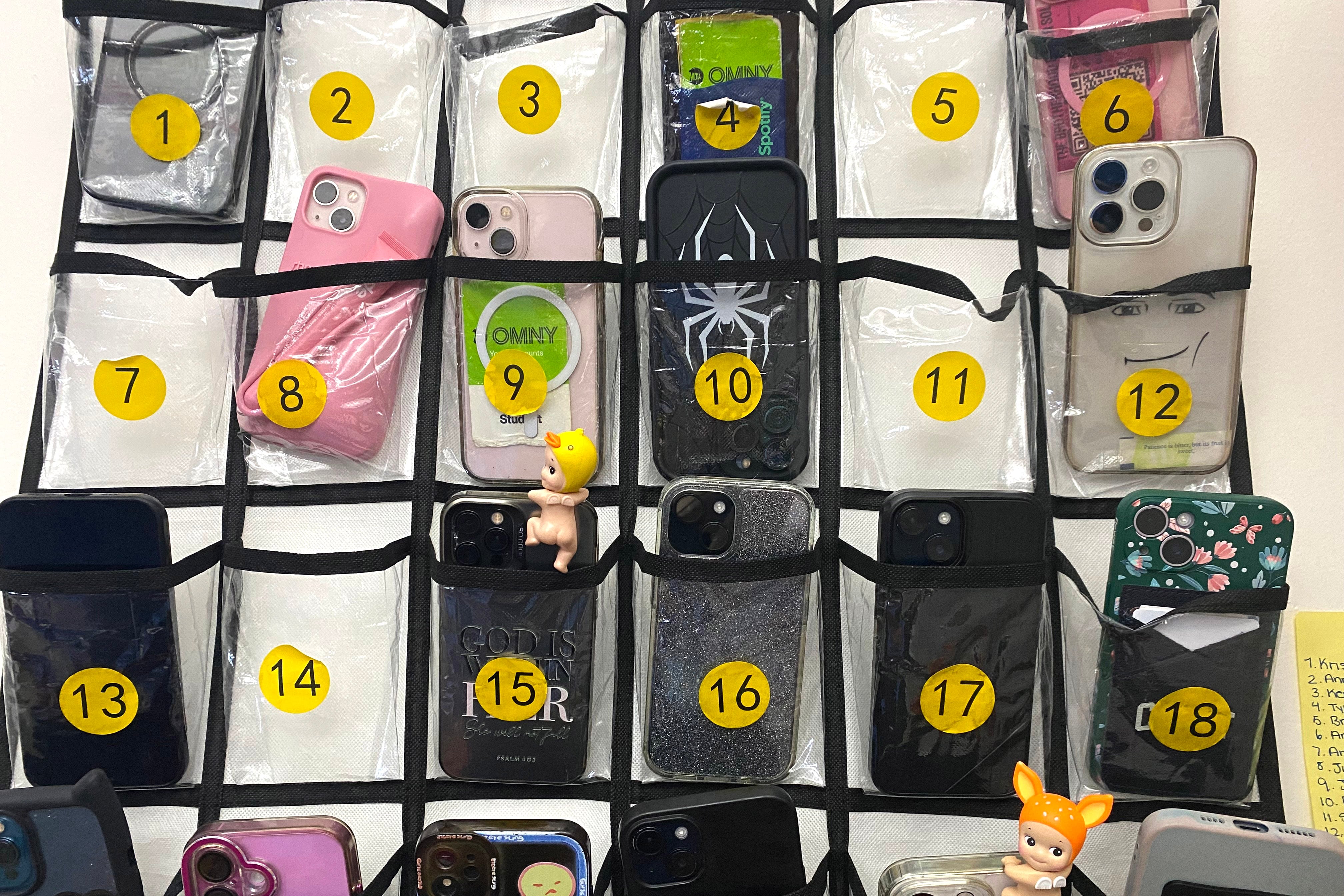
District leaders also debated how to enforce the bans, including whether students should lock away their phones or keep them in their pockets or backpacks. One common argument for allowing students to hold onto their phones revolved around school safety.
“God forbid if something were to happen … families want to be able to have their kid send that text: ‘I’m OK Mom,’” Pueblo School District 60 Superintendent Barbara Kimzey said.
Melanie Asmar is the bureau chief for Chalkbeat Colorado. Contact Melanie at masmar@chalkbeat.org.