Did you know search engines like Google are changing the way you see news? Keep Chalkbeat’s valuable education coverage at the top of your feeds by clicking here and checking the box next to our name.
The Memphis-Shelby County schools takeover board on Tuesday held its first meeting in five months to discuss its priorities in overhauling the state’s largest school district, though a local judge has temporarily blocked the board from taking any action amid an ongoing lawsuit.
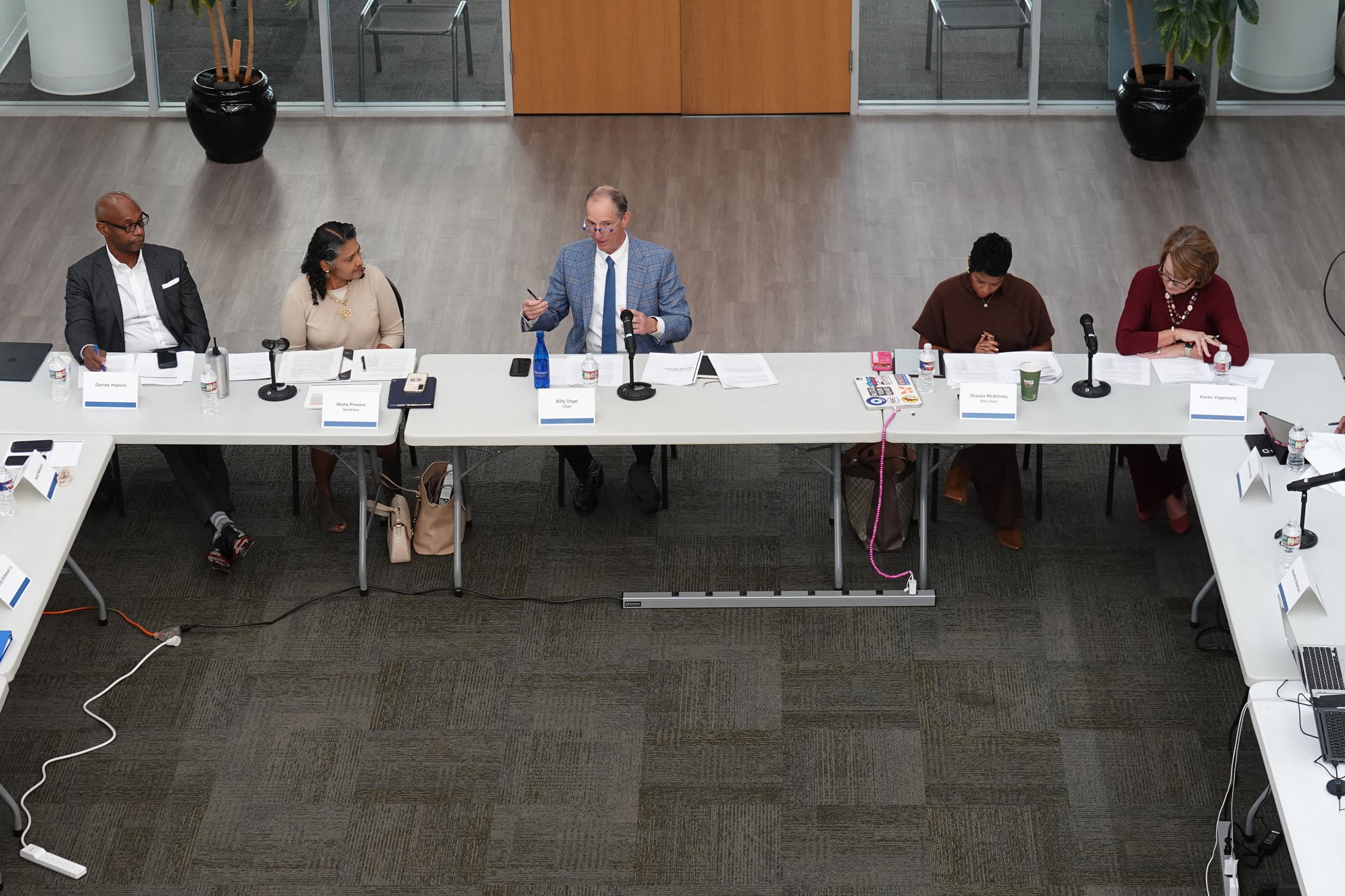
The nine-person Memphis-Shelby County Schools Educational Oversight Board met in person in Memphis for the first time amid a months-long legal fight with the locally elected school board, which has filed lawsuits in both federal and local courts challenging the legality of the new board appointed by state leaders.
Board member David Mansouri, who leads education advocacy nonprofit Tennessee SCORE, said he wants Memphis to see “dramatic” achievement gains.
“And not just in student proficiency, but also in college career readiness, and in the performance of our lowest performing schools,” he said Tuesday.
Other board members echoed the importance of focusing on high school outcomes for Memphis students, looking at not just graduation rates but post-secondary job access and dual enrollment opportunities. Part of that work should include a focus on chronic absenteeism, Mansouri said, which currently affects almost 40% of Memphis high schoolers.
Former Superintendent Dorsey Hopson said the district needs to be a better place for teachers to work, in order to retain high quality educators in the classroom. Nearly one-fifth of MSCS teachers left their positions in 2025, according to the most recent state data.
“We have a serious talent problem,” he said.
The oversight and locally elected boards are next due in court on Dec. 2, when a local judge could allow the new board to move forward with the takeover. If cleared, the appointed board will take control of key district operations, including hiring and firing a superintendent and approving the district’s annual budget.
Since July, oversight board members have been working behind-the-scenes with Florida-based consulting group MGT to create procedures and priorities for the board, which has lacked basic infrastructure like member email addresses.
The board’s work with a private consulting firm has stirred up controversy. Board leaders continue to decline to answer questions about MGT’s costs and its funders, though they have disclosed that MGT is supported by pro-takeover nonprofit Seeding Success.
MGT led discussions Tuesday about the takeover board’s initial actions and priorities. If the temporary block is lifted, board leaders said they’ll immediately move to hire an executive director who would run communications and lead academic changes with a salary of $190,000 to $220,000 per year.
Board Vice Chair Shanea McKinney says she hopes to have that director in place and working by Feb. 1. But the board isn’t able to hire for that role while under a court-imposed temporary restraining order.
Board members can hire outside legal counsel, McKinney said, and they aim to vote on a recommended firm in the next full meeting on Dec. 3. A representative from the attorney general’s office said the board can likely apply to use some of their designated $1 million funding from the state department of education for that position.
The state takeover law indicates that other employees hired to work for the oversight board will have to be paid using MSCS funds, including the executive director.
Bri Hatch covers Memphis-Shelby County Schools for Chalkbeat Tennessee. Reach Bri at bhatch@chalkbeat.org.