Did you know search engines like Google are changing the way you see news? Keep Chalkbeat’s valuable education coverage at the top of your feeds by clicking here and checking the box next to our name.
School cell phone bans are overwhelmingly popular with teachers, and many school administrators say that getting kids off their phones has changed the culture at their schools.
But the only large national study to date found “close to zero” effect on test scores, along with other downsides, such as an increase in suspensions. That was disappointing to many policymakers, researchers, and educators who wondered if the decade-long decline in student performance that predates the pandemic might be related to the introduction of the smart phone.
A new national study out Tuesday using different methods offers a more optimistic take.
Strict cell phone bans that require students to put their phones in locked pouches can increase test scores a little bit — about the equivalent of students spending one or two extra weeks in school every year, according to researchers at Harvard University and Dartmouth College.
The study acknowledges that the annual impact on test scores, about 0.01 standard deviations in reading and math, would be considered very small in most circumstances. But it’s similar to about one half of the annual declines in test scores that students experienced before the pandemic. If those small annual declines could add up to a big decrease, then similarly small improvements over time could also add up, the researchers conclude.
The study comes as three-quarters of states now have a law or policy restricting student cell phone use at school. In October, Pennsylvania became the most recent state to adopt a “bell-to-bell” ban intended to keep students off their phones for the whole school day.
With many school districts strapped for cash and federal support for tutoring dried up, lockable pouches are a reasonable investment in student learning, though not a panacea, said Tom Kane, faculty director at Harvard’s Center for Education Policy Research and an author of the new study.
“A strict cell phone ban is a low-cost way to add one to two weeks of instruction per year,” he said. “It’s certainly a cheaper way than paying teacher salaries for an extra one to two weeks.”
The test score effects “would have been very discouraging for a targeted, expensive intervention like tutoring,” he said, “but this was not targeted, and it is a low-cost intervention.”
The new study adds to a limited and mixed evidence base for how cell phone bans affect student academic performance. Test scores aren’t the only metric that matters in deciding whether these policies work, but given how much attention has been placed on student phone use as a cause of academic decline, researchers want to get a better handle on this question.
The study received financial support from the John Overdeck Foundation and the Walton Family Foundation, both of which also provide financial support to Chalkbeat. (You can read about our funders here and our ethics policy here.)
Tom Dee, a Stanford researcher who worked on the earlier national study that did not find meaningful effects on test scores, called the new study’s findings “sobering results” that are not that different from his own.
“These are really small, sensitive estimates that fall short of the ambitions many of us had for school phone bans.”
As for the idea that these results might add up over time, Dee said he hopes Kane and his research team are right. “But based on the evidence in their study, point estimates that are small and sensitive and sometimes statistically insignificant, I would be uncomfortable making that projection.”
Kane’s team used individual student test score data from the testing company NWEA, which produces the widely used MAP Growth assessment. The study is based on anonymized individual student data from roughly 3.3 million students at 4,600 schools between the 2021–22 and 2025–26 school years.
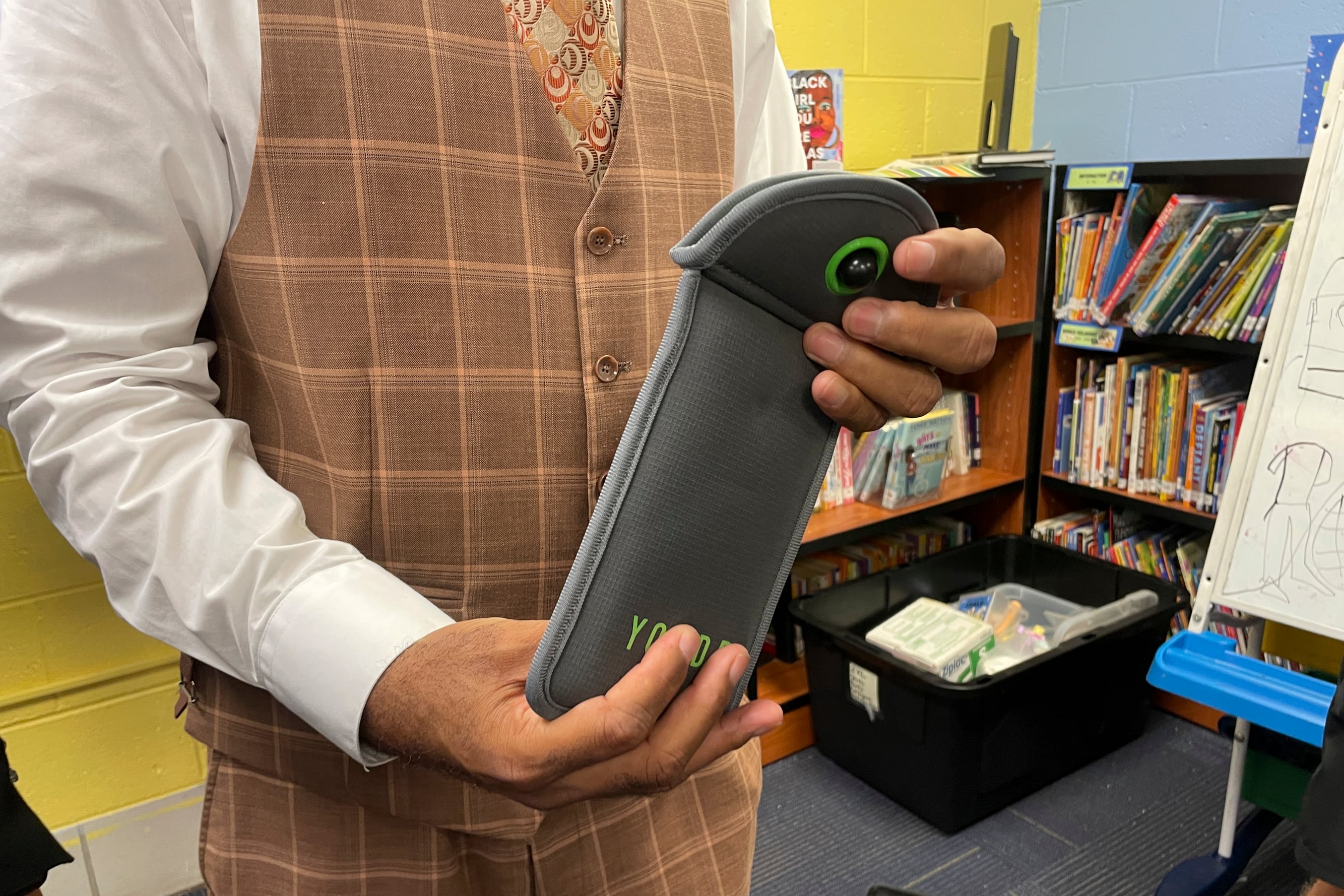
The study focuses on schools that purchased Yondr pouches starting in 2022 and includes up to four years of fall and spring test data after those bans went into effect. The pouches, which use a magnetic lock, cost about $25 to $30 per student, an expense that can add up for large districts. The company’s CEO told CBS News that it has experienced triple-digit annual growth since the pandemic but declined to disclose its revenue.
Students at schools using Yondr pouches showed very small but steady gains across multiple years, the study found. Results were similar across elementary, middle, and high schools and for schools of different poverty levels and student achievement rates.
The study didn’t show that students in the bottom ranks of achievement improved any more than other students did from their starting point. That was disappointing, Kane said, because national declines in student test scores largely are driven by steep drops among the lowest performing students.
At the same time, strict cell phone bans reduced the number of students experiencing large losses in reading achievement, which could help stem the losses among students struggling the most.
The research team also looked at changes in test scores before and after the adoption of state-level cell phone bans, which often are less strict and vary more from school to school. The study found small positive trends in states that adopted bans, but the authors caution that the states that banned phones also were on different trajectories before the ban, making it difficult to isolate the effect.
David Figlio, a University of Rochester economist whose early study of Florida’s cell phone ban found test score improvements in one large school district, said he finds Kane’s analysis of outcomes related to locking pouches persuasive, but he’s less convinced by the analysis of state-level bans. He praised the study for being transparent about the challenges with analyzing differences between states.
All three cell phone studies in U.S. schools found the bans reduced student cell phone use, which is notable, Figlio said. Some skeptics thought students would break Yondr pouches or use decoys to evade the bans, and that does happen. But studies have consistently found that pings to cell phones dropped after bans went into effect.
One challenge for researchers, Figlio said, is that bans have not been in place for very long, and COVID disruptions interrupt the data from earlier years. More benefits could appear over time.
That may be true, Dee said. Or perhaps bans need to be stricter or more attention needs to be paid to laptops in school and social media use outside of school. But while schools should continue to experiment with restrictions, researchers and policymakers should also keep an open mind. The causes of academic declines may lie elsewhere and require different solutions, he said.
Kane said there especially needs to be more research on the impact of student social media use. He said the Meta settlement represents an opportunity to compel social media companies to share anonymized data about student use during the school day, as well data on out of school use that could affect homework and sleep.
Erica Meltzer is Chalkbeat’s national editor based in Colorado. Contact Erica at emeltzer@chalkbeat.org.