Sign up for our free monthly newsletter Beyond High School to get the latest news about college and career paths for Colorado’s high school grads.
A first-of-its-kind federal program promises to connect low-income students with free money to pay for short-term job training. Called Workforce Pell, the grants represent the largest expansion of federal financial aid in 50 years.
But the Trump administration’s revamp of Pell grants, which traditionally paid for college tuition, has so far required a tempering of expectations in Colorado.
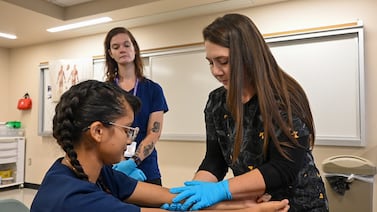
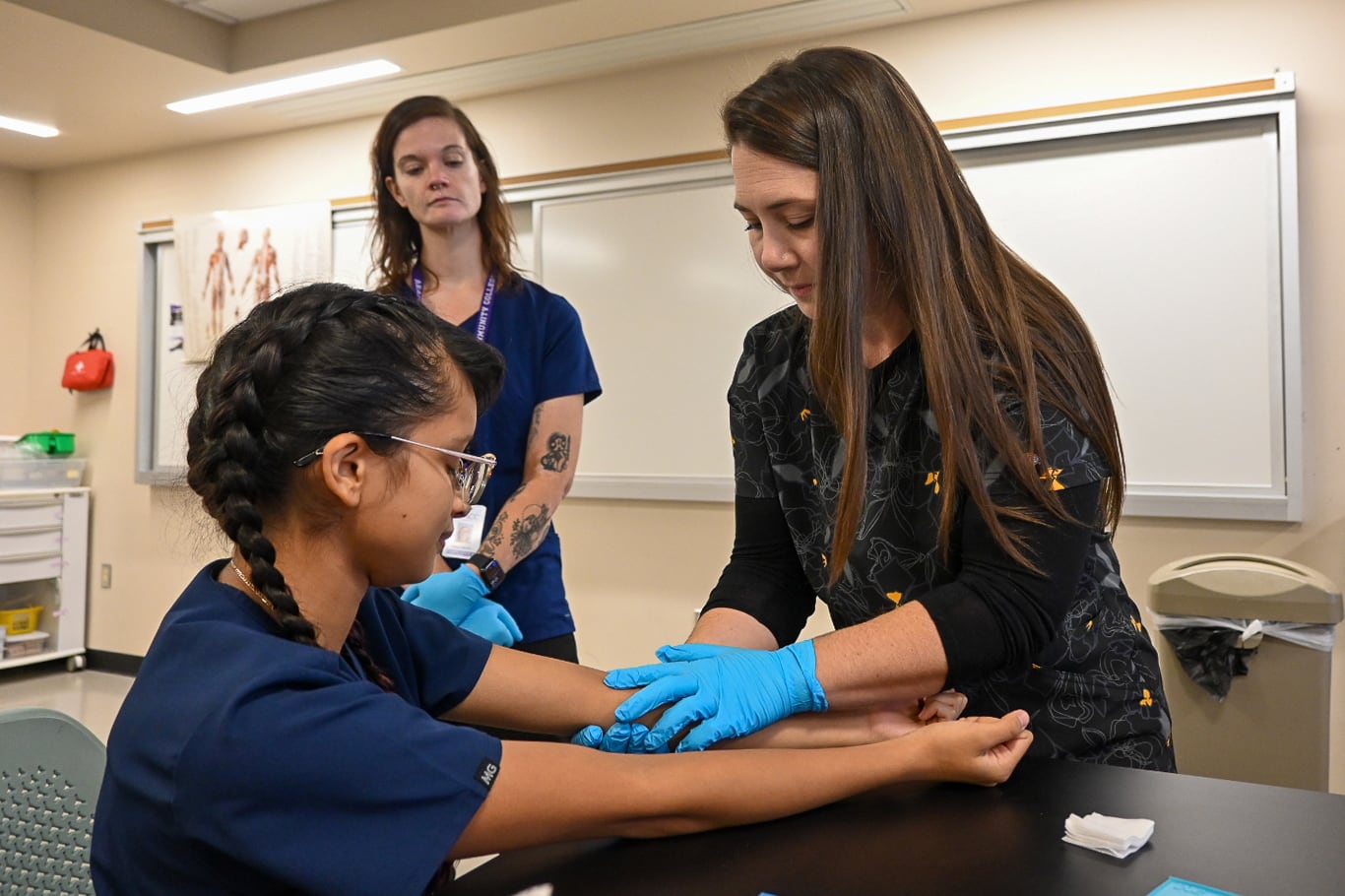
The state has hundreds of workforce training programs, but as community college administrators began parsing the strict rules to see which programs might qualify for the free aid, they realized it was fewer than they’d hoped. Only seven institutions submitted a combined 20 applications. The state earlier this month greenlit just five programs — three for emergency medical technicians and two for phlebotomists, who draw and prepare blood samples.
Colorado community college officials say they struggled to match or produce data required by the state and federal government. Some programs are also too long or short to participate.
These hurdles, which mirror what’s happening in other states, have slowed Colorado’s rollout of Workforce Pell, officials say, and for at least the near future limit the number of programs that can participate. That leaves students who want to use these grants with only a few options.
Only programs that take between eight to 14 weeks for students to complete, have a 70% completion rate, place at least 70% of graduates in jobs within six months, and help graduates earn higher wages are eligible to accept the free aid, according to the federal rules.
Officials at the three colleges where programs were approved called the Workforce Pell reporting requirements some of the most difficult they’ve encountered, but agreed the information helps connect students to strong programs in high-demand fields.
“It’s hard work,” said Dustin Eicke, president of Trinidad State Community College, which earned Workforce Pell grant approval for two emergency medical technician certificate programs. “It is, but it allows us to ensure that we have the same standards across the board.”
The launch of Workforce Pell comes as an increasing number of Americans are skeptical of the time and money it takes to get a traditional degree. Lawmakers across the political spectrum fought for years to build support for subsidizing job training, and the Trump administration included it in the One Big Beautiful Bill Act. The Workforce Pell grants could help students cover about $2,200 a year in educational costs.
Programs receive approval through a two-tiered process. State agencies intake and vet applications before approval from the governor’s office. Programs then need final approval from the U.S. Department of Education before they can connect students with federal aid.
Since Workforce Pell launched in July, the Education Department has approved 21 programs in six states that train students for jobs in machining, electrical line work, welding, and healthcare. Colorado’s five programs have not yet received federal approval.
Colorado Mountain College has more than a dozen programs that could potentially qualify for Workforce Pell, including in real estate, baking arts and welding, said Dean of Academic Support Karla Hardesty. But the Western Slope college only submitted four programs that don’t offer financial aid so it could gain familiarity with the process.
Two, for emergency medical technicians and phlebotomists, were approved. Two others, for emergency medical technician and wilderness emergency medicine certificates, were denied. The state said the rejected programs didn’t meet completion and job rate data standards, a common reason for the Workforce Pell denials.
Arapahoe Community College’s Julie Beggs, vice president of economic mobility and workforce innovation, said campus officials hoped Workforce Pell might help students pay for a longer list of non-credit workforce programs like boot camps in cybersecurity and apprenticeships. As rules became finalized, college officials realized those programs might not qualify.
The Arapahoe school submitted Workforce Pell applications for certificates in early childhood education, nurse aide, emergency medical technician, and phlebotomy. Its phlebotomy program was the only one approved by the state.
A Colorado Department of Labor and Employment spokesperson said programs that were not approved will get state support to meet the rigorous eligibility requirements in future application cycles. The state has not said when it will open another cycle.
Michael Itzkowitz, founder of college research organization the HEA Group, said federal data requirements were designed to be tough to ensure students and taxpayer dollars aren’t going to shoddy programs.
He said it’s too early to tell whether Workforce Pell is a success in helping more students connect to affordable job training.
“With only a few approvals across the country as of yet, the story has yet to be written,” he said.
School officials in charge of Colorado’s approved programs are unsure when they will be able to allow students to apply for federal aid.
Beggs hopes Arapahoe students could use the program as early as the summer, and she’s excited about what the Pell money will mean to lower-income students who sometimes struggle to pay for these courses.
“It kind of expedites their trajectory,” Beggs said. ”And then it just creates on-ramps to a longer-term education.”
Arapahoe phlebotomy student Kendall Bingenheimer, 35, won’t benefit from those grants. But she knows firsthand how imperative federal Pell grants can be for lower-income students after using them at Metropolitan State University of Denver to earn a biology degree.
Bingenheimer got some state aid to pay for the phlebotomy program, but Workforce Pell grants could cover most of that cost for future students.
“Not everybody is born into money,” Bingenheimer said. “If you can really allow people access to school, make it more accessible, more people will do it, and then you have more people joining the workforce. That’s never a bad thing.”
Jason Gonzales is a reporter covering higher education and the Colorado legislature. Chalkbeat Colorado partners with Open Campus on higher education coverage. Contact Jason at jgonzales@chalkbeat.org.