Did you know search engines like Google are changing the way you see news? Keep Chalkbeat’s valuable education coverage at the top of your feeds by clicking here and checking the box next to our name.
As Denver Mayor Mike Johnston pitches universal childcare as a way to keep the city affordable, the city’s 20-year-old preschool tuition assistance program is expanding its mission to focus on children from birth to age 5.
Leaders of the Denver Preschool Program announced the creation of First Step Collective, a new citywide umbrella organization, during a press event Thursday morning at the Blossom House community building in the Westwood neighborhood.
The new organization will include the Denver Preschool Program as well as other early childhood groups, programs, and services. It will be fully operational by August 2028, said Elsa Holguín, president and CEO of the Denver Preschool Program.
The preschool program’s expansion comes as infant and toddler care remains a major pain point for working parents and state and local governments experiment with increasingly ambitious early childhood efforts. In 2025, New Mexico became the first state in the nation to offer free childcare to all families regardless of income. Since the pandemic, voters in a host of Colorado communities — most recently Boulder County — have approved new local taxes to generate funding for childcare.
The launch of First Step Collective comes two weeks after Colorado voters approved two statewide ballot measures — Proposition NN and Amendment 87 — that could provide substantial new funding for early childhood programs in the coming years. It also coincides with Johnston’s “Child Care for All” initiative, which he announced last summer and aims to expand childcare access and reduce costs for families.
Holguín told Chalkbeat Johnston’s effort and First Step Collective are aligned and that the collective could help provide the infrastructure needed for the mayor’s plan.
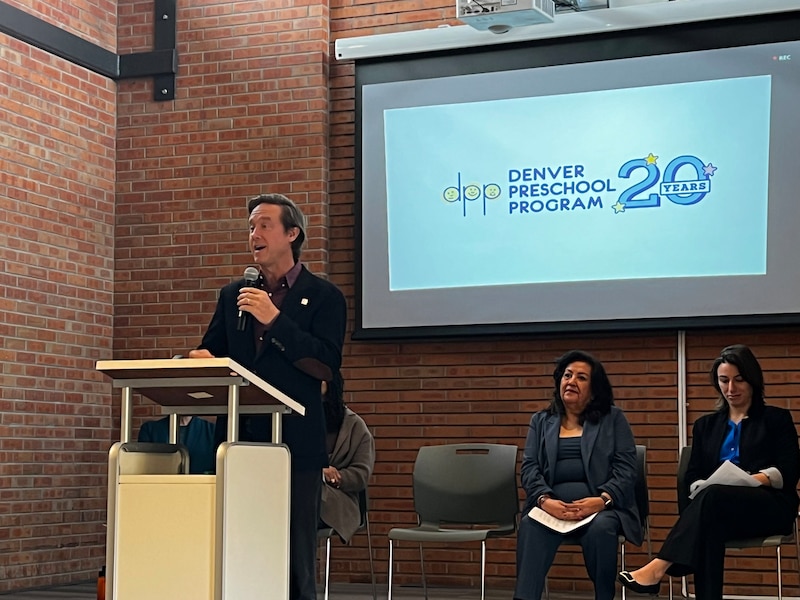
Johnston said during Thursday’s event that a city task force will spend the next three to four months designing Child Care for All.
“From there, we would pilot that program … and then figure out what that program would cost, and then prepare to go to voters with whatever we thought the long-term design might be,” he said.
Johnston noted that voters twice rejected a sales tax for the Denver Preschool Program before narrowly passing the measure on the third attempt.
“We now have a path to say, well, we want to do four times that,” he said. “We want to say not just 4-year-olds. Can we do the entire continuum of care?”
Denver voters approved the sales tax for the Denver Preschool Program in 2006, extended it in 2014, and made it permanent in 2023. The program offers preschool tuition assistance to all Denver 4-year-olds, with every family eligible for some help and those with low incomes getting the most. The program also offers tuition assistance to some 3-year-olds.
As the Denver Preschool Program’s 20th anniversary approached, leaders began rethinking its scope and purpose. The result was First Step Collective, which they say will provide a one-stop shop to help families with young children find childcare, figure out how to pay for it, and learn about other programs they’re eligible for. It may also help pay for infant and toddler care.
Holguín said First Step Collective will seek philanthropic dollars to cover startup costs over the next two years.
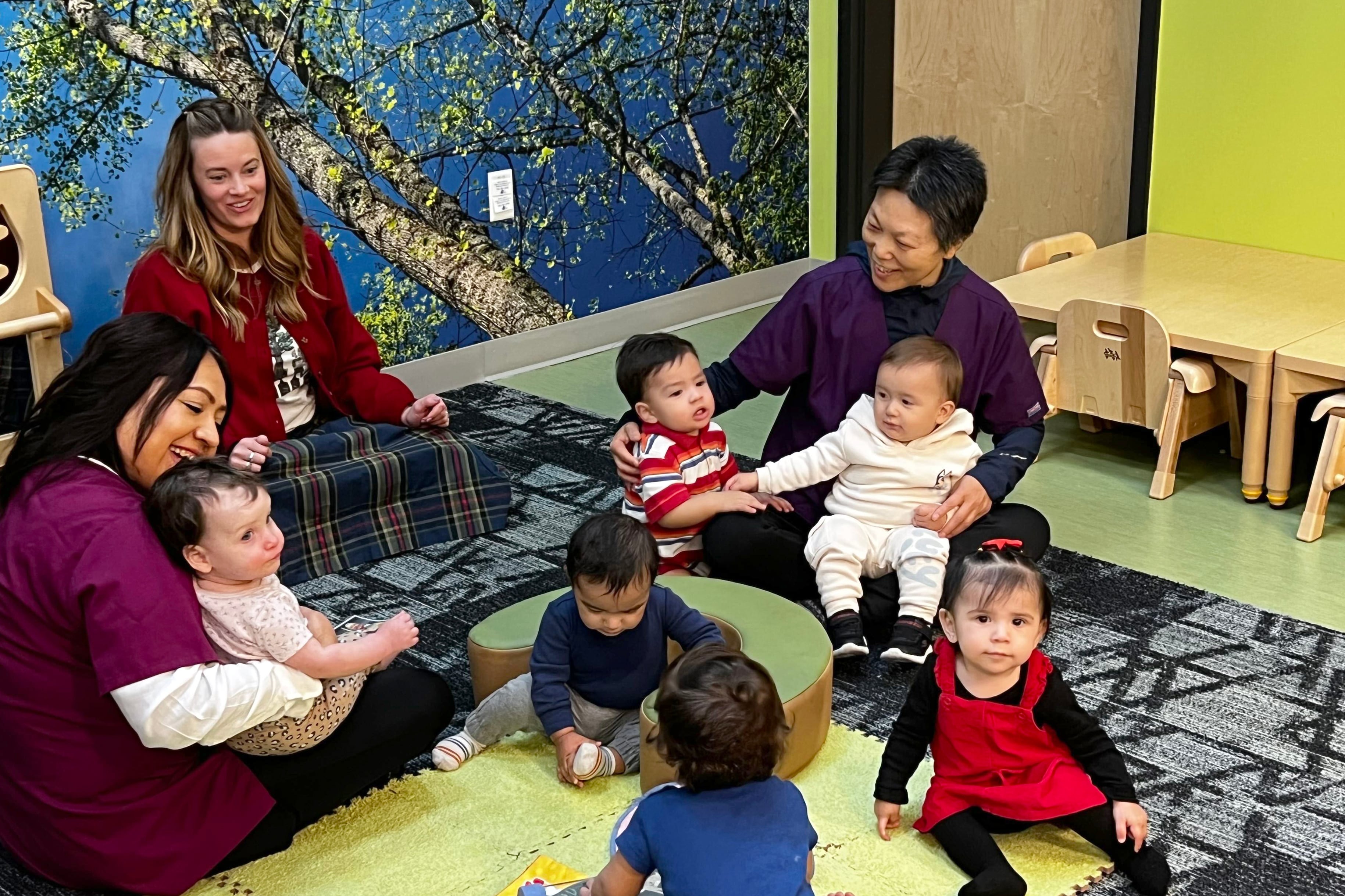
One component of the collective will be pilot programs to test ideas that could eventually be scaled up. One such pilot is underway at Blossom House Early Learning Center. It provides tuition-free childcare to eight families with infants and toddlers, with the goal of determining how applications and policies should differ for younger children.
Another possible pilot will look at compensating unlicensed caregivers such as grandparents or neighbors. Many parents rely on so-called family, friend, and neighbor care, especially those with babies. But the size and makeup of that workforce are difficult to determine because no state agency or group tracks it.
“It’s unknown territory,” Holguín said. “If there is an organization that can figure that out, it’s us.”
Other offerings under the First Step umbrella will include MyFriendBen, an online tool used in several states, including Colorado, that helps families determine which benefits and tax credits they’re eligible for. Denver’s Early Childhood Council may also participate, Holguín said.
Eventually, First Step Collective will help create a more vibrant city for families, she said.
“For many of them, it’s going to mean I either can stay in Denver, or I can come back to Denver, and I can afford to be part of this community,” she said.
Ann Schimke is a senior reporter at Chalkbeat. Contact Ann at aschimke@chalkbeat.org.