Did you know search engines like Google are changing the way you see news? Keep Chalkbeat’s valuable education coverage at the top of your feeds by clicking here and checking the box next to our name.
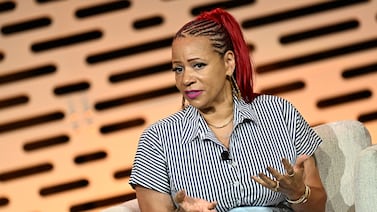
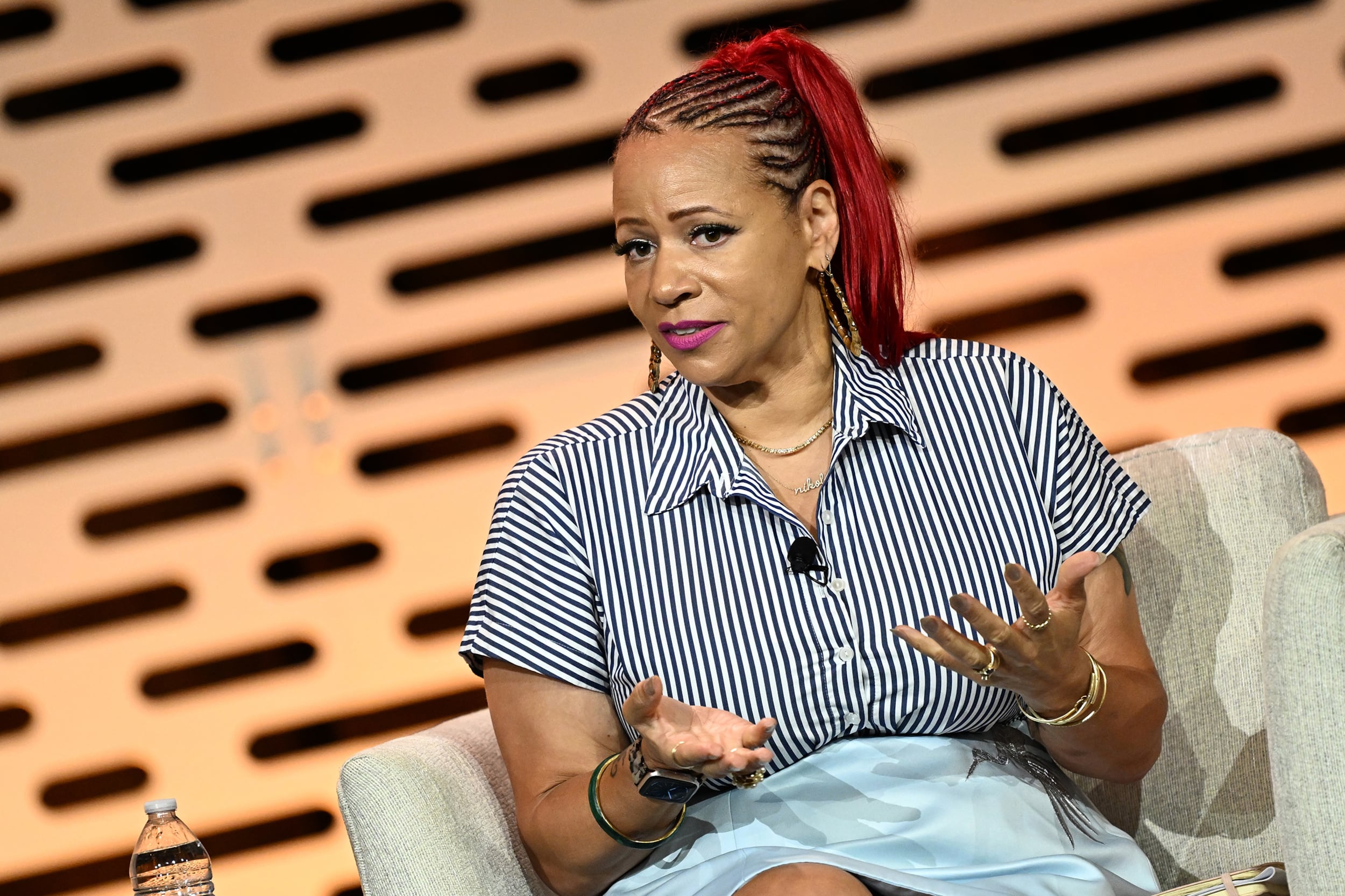
When education journalist Nikole Hannah-Jones documented her choice to enroll her daughter in a high-poverty, high-needs elementary school back in 2016, her viral New York Times essay helped spark a movement.
The nation’s preeminent critic of school choice and charter schools as drivers of segregation and inequality said parents who oppose those outcomes must live their values. When she first enrolled Najya in P.S. 307, she worried whether she was making the right decision. “But I knew I made the just one,” she wrote.
Ten years later, Najya feels cheated by her mother’s choice.
“Sometimes I wish instead of always thinking about other kids, you would have thought about me,” Najya told her mother for a recent New York Times essay, as the extent of her academic gaps became clear. “I never really got the education I wanted.”
After Najya’s struggles in elementary and middle school, Hannah-Jones allowed her daughter to choose her high school. It’s a selective school that exemplified the inequality Hannah-Jones had previously condemned, she admitted. That admission, and her experience, has sparked a nationwide debate about the state of public education.
“In the end, I could not even sustain the cause within my own family,” Hannah-Jones wrote.
Some of the most caustic reactions came from conservatives, who in effect said Hannah-Jones had revealed herself to be a false prophet. Fox News said Hannah-Jones had “learned the hard truth” about public schools. National Review editor Rich Lowry said Hannah-Jones had still not faced that truth, blaming a racist system rather than bad teachers and administrators. “The New York City public schools mugged Nikole Hannah-Jones,” he wrote, “and yet she still doesn’t want to press charges.”
But conservatives weren’t alone. Keri Rodrigues of the National Parents Union said Hannah-Jones owed an apology to parents who used school choice to escape low-performing schools. Ordinary parents, including many Black parents, wondered why she didn’t prioritize her own child more.
On the other hand, Kaliris Salas-Ramirez, a longtime parent leader and integration advocate in New York City — which runs one of the nation’s most segregated school systems — hoped the piece would inspire efforts to address issues related to integration, such as access to resources and culturally responsive curriculum. “This is literally what reignites the work in this moment,” she said.
The piece generated hard conversations about education that won’t go away anytime soon. Here are a few of them.
Black parents can feel like they have no good choices
Black parents said Hannah-Jones’ essay illustrates the Catch-22 they’ve encountered: If they choose a school with a better academic reputation and a higher share of white students, will that come at the expense of their child’s emotional well-being?
“It either feels like you have to go one way and compromise on the other, and that doesn’t always feel good,” said Amber Thornton, the mother of a 5- and 7-year-old in Washington, D.C., as she watched her son’s soccer game.
Ultimately, Thornton — who discussed the matter on TikTok — said Hannah-Jones’ essay made her wonder if she should place more emphasis on academic rigor when it comes to choosing the next school.
@dramberthornton I’ve spent a lot of time considering what would happen if my kids grew up in an all White school. Who they will become? Or if I would regret ever making that type of choice. That fear has led me to often choose academic environments where my Blackness is always reflected positively and abundantly. And at this time- I don’t regret that, but @nikolehannahjones article has made me look at my choices, and how it’s also influenced by fear. It’s a fear that feels unfair because I know that my White friends don’t have to carry this likeI do. It’s also a fear that I know will never go away. Black parents in America carry in a tremendous burden in wanting to make the right choices for their children and the anxiety can feel insurmountable. I appreciate this article for reflecting this reality. *Will share more thoughts on The Dr. Amber Show later! #nyt #nikolehannahjones
♬ original sound - Dr. Amber | Psychologist
One young woman whose parents sent her to a predominantly white high school said in a TikTok video that while she felt prepared academically for college, her high school years were characterized by isolation and racism.
Research suggests this experience is not uncommon and can have academic consequences.
@temi_adeo I don't make videos this long or vulnerable usually but if you guys are normal I'll do more of them, talk about my experiences more
♬ original sound - temi_adeo
Others rejected the idea that there is such a stark trade-off. Hannah-Jones overlooks the schools that boast both a diverse student body and high academic standards, they said.
“My schools were hella Black and my teachers were hella smart,” an educator who goes by Dr. Miah wrote in a Substack post. “My public schools were high achieving; my teachers had high expectations.”
What happens in schools matters
Hannah-Jones describes chaotic school environments and absent teachers in elementary school. In middle school, the principal is engaged and caring, but Najya manages to get As in algebra without learning algebra. Najya was still shaky on long division and fractions, skills she should have learned in elementary school.
These problems are well-documented in high-poverty schools. But they’re not universal.
Some education advocates highlighted the charter sector, where some schools produce consistently high test scores for children with major challenges outside of school. Critics say charters sometimes achieve those results by serving only kids whose parents opt in.
Public school parents also weighed in to say their children attend high-poverty schools with better academic results.
Research suggests that principal leadership, teacher quality, and evidence-based curriculum all make a difference. Hannah-Jones herself describes P.S. 307 changing after a dynamic principal retired.

Hannah-Jones described schools serving mostly Black children as chronically lacking in resources. And studies have shown that money matters in education. But critics quickly pointed out that P.S. 307 gets plenty of money — roughly $43,800 per student, according to city data, though the conservative Manhattan Institute pegged it even higher. P.S. 307 gets that kind of funding because more than a quarter of its students are homeless and 43% have disabilities.
Writing in the Wall Street Journal, Roland Fryer described the characteristics that distinguish effective schools: “more instructional time, high-dosage tutoring, frequent teacher feedback, data-driven instruction and a culture of high expectations.”
“What matters isn’t only how much money reaches a school, but what happens after it arrives,” he wrote.
David Adams, CEO of Urban Assembly, the network of schools to which Najya’s middle school belongs, said in an interview that Urban Assembly is taking steps to assess students’ skills more precisely when they enter middle school and provide more differentiated instruction. Their success will be measured by student outcomes, he said.
Urban Assembly schools don’t screen their students, which means they serve more students with disabilities, more living in temporary housing, and more in intense poverty.
None of that absolves educators of the responsibility to ensure those children learn, Adams said: “That is the promise that we make to our families, and that is the promise that we will continue to fulfill by solving problems.”
The piece also exposed gaps in expectations of parents and teachers.
Many parents expressed shock that Najya’s homework — riddled with math errors — was never corrected or graded, leaving her to believe she was doing well. But some teachers took to social media saying they just don’t have the time to grade homework.
Is school integration still a worthy and realistic goal?
Hannah-Jones’ latest piece left many wondering about the feasibility of trying to desegregate schools.
Writing in New York Magazine, Zak Cheney-Rice noted that there seems to be little appetite in society for collective efforts at integration.
And one person called it “insane” that Hannah-Jones would fight segregation “by segregating your child.”
That type of reaction alarms Andrew Lefkowits, a white parent in Denver who co-hosts the Integrated Schools podcast and describes Hannah-Jones as deeply influential in his own decision to send his children to high-poverty schools where they are in the minority.
“The concern I have is that white parents in particular will see themselves in her experience and use it as an excuse to opt out,” he said. “She came with a lot of privilege, but her daughter’s experience is not the same as my daughter’s experience. We still have a cushion of (white) privilege.”
Educator and advocate Christopher Stewart recalled his frequent public disagreements with Hannah-Jones over the merits of integration versus Black-led charters, which he has championed.
But after reading Hannah-Jones’ piece, he did his own reassessment.
“The either-or framing has kept thoughtful people from saying the obvious,” he wrote in his Substack. “Black-led schools have a record of excellence the integration story tends to erase, and integrated schools do real civic work, reducing prejudice and preparing children for life in a country that is not always united.”
Erica Meltzer is Chalkbeat’s national editor based in Colorado. Contact Erica at emeltzer@chalkbeat.org.
Amy Zimmer is the bureau chief for Chalkbeat New York. Contact Amy at azimmer@chalkbeat.org.
Lily Altavena is a national reporter at Chalkbeat. Contact Lily at laltavena@chalkbeat.org. Lily is on Instagram, Tik Tok, and Facebook.